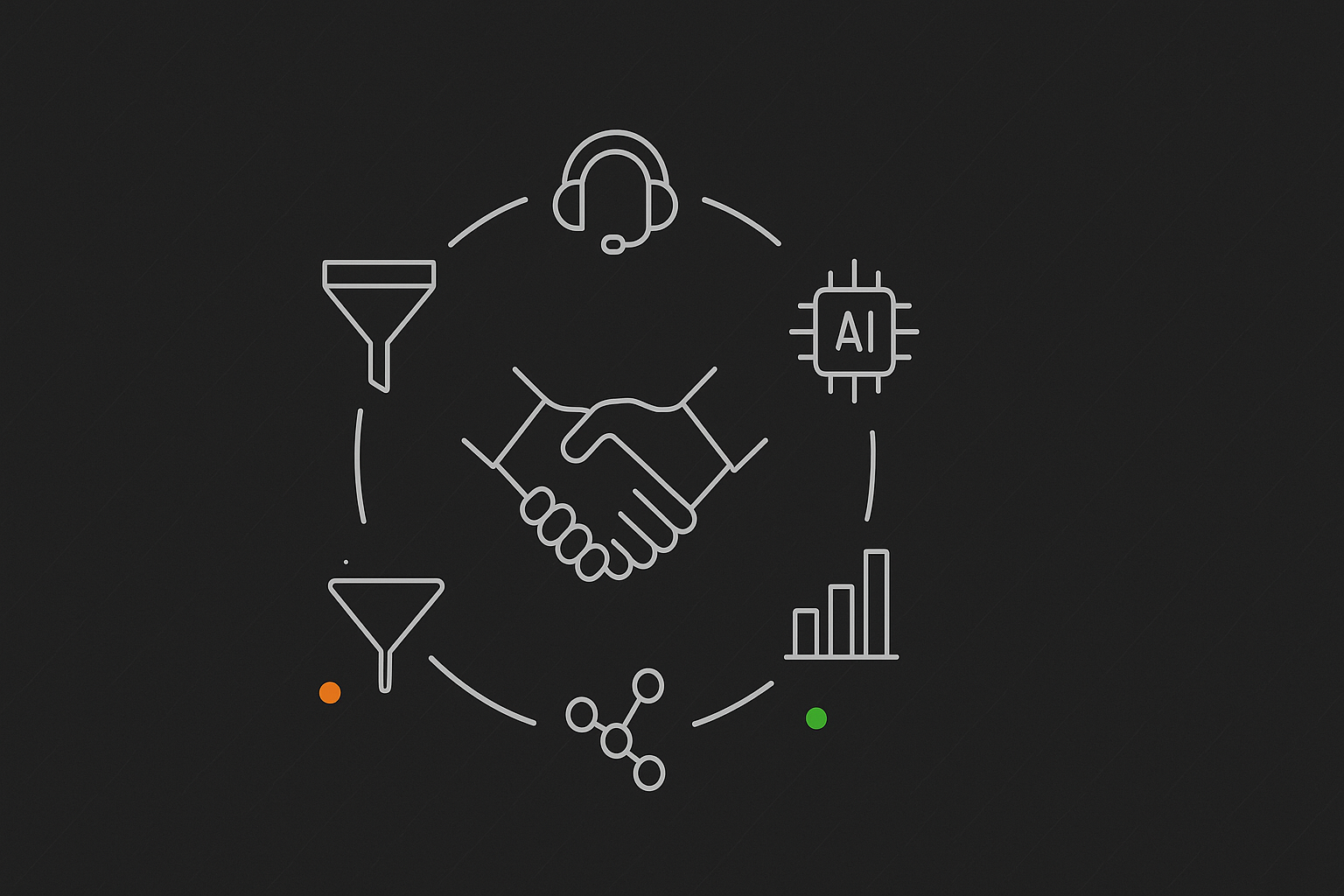
<p>In 2026, marketing and customer service are no longer separate worlds. The landscape is shifting fast as customer expectations rise and the lines between marketing and service blur. Success now depends on how well these teams work together.</p> <p>This guide dives into the future of marketing and customer service, showing why their alignment is the secret to business growth. You will discover practical strategies, real data, and examples to help your team excel.</p> <p>We will explore how customer expectations are changing, the impact of data and AI, step-by-step integration strategies, tips for cross-team collaboration, and the trends shaping tomorrow. Ready to build a roadmap for excellence in 2026? Let’s get started.</p> <h2>The New Landscape: Why Marketing and Customer Service Must Align in 2026</h2> <h3>The Evolution of Customer Expectations</h3> <p>Customer expectations have changed dramatically in recent years. Today, people expect instant, personalized, and consistent experiences across every channel. Nearly 88% of consumers check online service reviews before making a purchase, so the stakes are higher than ever.</p> <p>Social media platforms can amplify both positive and negative moments in real time. If marketing and customer service teams are not working together, even a single misstep can go viral and damage your brand. Take Netflix for example. Their witty, supportive social media presence blends marketing and service, creating seamless experiences that customers love.</p> <p>Modern buyers crave transparency and authenticity. They want to know they’re dealing with a brand that listens and responds quickly. If marketing and customer service are not aligned, any disconnect becomes obvious—and costly.</p> <h3>The Business Case for Integration</h3> <p>Aligning marketing and customer service is no longer optional. Companies that achieve this integration enjoy up to 20% higher sales, as reported by Forbes. Cross-functional collaboration reduces lead loss and boosts customer retention because teams can respond faster and more intelligently.</p> <p>Unified teams deliver a consistent brand message at every stage of the customer journey. Data and feedback loops between marketing and customer service drive continuous improvement, allowing campaigns to be refined in real time. For a practical example of this approach driving results, check out this <a href="https://www.catchdigital.io/blog/customer-journey-funnel-225-conversions-case-study" target="_blank" rel="noopener noreferrer">customer journey funnel case study</a>.</p> <p>When teams share goals, the blame game disappears. Instead, everyone feels a sense of shared purpose and ownership over the customer experience.</p> <h3>Key Challenges and Opportunities in 2026</h3> <p>Despite the benefits, many organizations still struggle with silos that limit data sharing and agility. The rise of AI and automation offers new ways for marketing and customer service teams to collaborate, but only if they’re willing to break down barriers.</p> <p>Digital touchpoints like self-service portals blur the lines between marketing and customer service. This shift requires employees to develop new skills, including data literacy, empathy, and cross-functional communication. The brands that win in 2026 will be those that embrace these changes and foster true collaboration.</p> <p>There’s a real competitive advantage for those who move quickly. Breaking down silos unlocks faster innovation and a better experience for everyone.</p> <h3>Real-World Impact: Success and Failure Stories</h3> <p>The impact of marketing and customer service alignment is clear in the numbers. Brands with poor service lose 39% of customers after just one bad experience. On the flip side, companies that use service insights to guide product launches or marketing content see measurable gains.</p> <p>For example, when teams are disconnected, customers receive mixed messages and get frustrated fast. But when marketing and customer service share information, messaging is consistent and customers feel valued.</p> <p>Integrated teams also report higher workplace satisfaction and lower turnover rates. In short, the benefits reach far beyond the customer—they improve employee experience and business performance.</p> <img src="https://xqvnmkjynbkcujcrtubi.supabase.co/storage/v1/object/public/article-images/2fe625ee-60ea-4b84-9a89-c9ecda6d0458/article-2fe625ee-60ea-4b84-9a8-a-modern-informational-diagram-illustrating-the-al-0-iw99jf.jpg" alt="The New Landscape: Why Marketing and Customer Service Must Align in 2026"><h2>Step-by-Step: Building Seamless Marketing and Customer Service Integration</h2> <p>Ready to connect the dots between marketing and customer service? The path to seamless integration is not just about tools or processes, but about building bridges at every touchpoint. Here’s a practical, six-step roadmap to unify your teams and deliver standout customer experiences.</p> <img src="https://xqvnmkjynbkcujcrtubi.supabase.co/storage/v1/object/public/article-images/2fe625ee-60ea-4b84-9a89-c9ecda6d0458/article-2fe625ee-60ea-4b84-9a8-a-detailed-diagram-showing-the-six-step-integratio-1-tewryb.jpg" alt="Step-by-Step: Building Seamless Marketing and Customer Service Integration"><h3>Step 1: Map the Unified Customer Journey</h3> <p>Start by mapping every touchpoint where marketing and customer service interact with customers. This unified journey reveals overlaps and gaps, from first awareness to loyal advocacy. Tools like journey mapping software help teams visualize the full experience, highlighting handoffs that can make or break satisfaction.</p> <ul> <li>Identify moments where marketing campaigns drive inquiries to support.</li> <li>Pinpoint social channels where promotion and service blend.</li> <li>Document all transitions to ensure nothing falls through the cracks.</li> </ul> <p>For a deeper dive into aligning your customer journey with business objectives, explore these <a href="https://www.catchdigital.io/service/digital-marketing-strategy" target="_blank" rel="noopener noreferrer">digital marketing strategy essentials</a>.</p> <h3>Step 2: Establish Shared Goals and Metrics</h3> <p>Success hinges on shared KPIs that matter to both marketing and customer service. Define metrics such as Net Promoter Score, customer retention, and conversion rates. Set up joint dashboards so everyone has visibility into progress.</p> <ul> <li>Align incentives to shared outcomes.</li> <li>Use data to spot friction points and measure improvements.</li> <li>Schedule regular reporting to keep teams accountable.</li> </ul> <p>When both teams focus on the same results, collaboration turns into a habit, not a hurdle.</p> <h3>Step 3: Create Cross-Functional Collaboration Rituals</h3> <p>Routine collaboration is the glue of integration. Schedule recurring meetings where marketing and customer service exchange insights—service shares customer pain points, while marketing previews upcoming campaigns.</p> <ul> <li>Use collaboration platforms for real-time communication.</li> <li>Build feedback loops so everyone stays informed.</li> <li>Encourage “job shadowing” sessions to foster empathy.</li> </ul> <p>These rituals build trust and ensure both teams are rowing in the same direction.</p> <h3>Step 4: Integrate Technology and Data Systems</h3> <p>Unified systems are essential for seamless marketing and customer service. Choose platforms that connect CRM, helpdesk, and analytics, creating a single view of each customer.</p> <ul> <li>Ensure data flows freely between teams.</li> <li>Leverage AI for real-time insights and personalization.</li> <li>Automate ticket tagging to inform marketing content.</li> </ul> <p>A well-integrated tech stack eliminates silos and empowers teams to act fast on customer needs.</p> <h3>Step 5: Empower Teams with Training and Playbooks</h3> <p>Cross-training brings marketing and customer service closer together. Teach both teams about messaging, brand voice, and escalation protocols. Develop shared playbooks for handling common scenarios, such as social media complaints.</p> <ul> <li>Foster a learning culture with regular workshops.</li> <li>Recognize collaborative behaviors to reinforce change.</li> <li>Use playbooks to ensure consistency across channels.</li> </ul> <p>When teams know each other’s playbooks, they respond faster and with more confidence.</p> <h3>Step 6: Pilot, Measure, and Scale</h3> <p>Start small with pilot projects—integrate marketing and customer service on a single campaign or channel. Gather feedback, both quantitative and qualitative, to iterate quickly.</p> <ul> <li>Measure what works and adapt as you go.</li> <li>Share wins and lessons learned to build momentum.</li> <li>Scale successful practices across the organization.</li> </ul> <p>This approach ensures integration is practical, not just theoretical, and sets you up for long-term success.</p> <h2>Data, AI, and Automation: Powering Smart Customer Interactions in 2026</h2> <p>The future of marketing and customer service is smart, seamless, and powered by data. In 2026, the companies that stand out are those blending advanced analytics, AI, and automation with a human-first approach. Let’s break down how these forces are reshaping every customer touchpoint, and what your team needs to know to deliver next-level experiences.</p> <img src="https://xqvnmkjynbkcujcrtubi.supabase.co/storage/v1/object/public/article-images/2fe625ee-60ea-4b84-9a89-c9ecda6d0458/article-2fe625ee-60ea-4b84-9a8-a-clear-infographic-style-diagram-showing-how-data-2-4cjr37.jpg" alt="Data, AI, and Automation: Powering Smart Customer Interactions in 2026"><h3>Harnessing Data for Personalization & Predictive Insights</h3> <p>Data is the lifeblood of modern marketing and customer service. By unifying customer information from every channel, teams can see the full journey—from first click to loyal advocate. Analytics tools reveal patterns in behavior, preferences, and pain points.</p> <p>This insight lets companies predict needs, personalize outreach, and proactively solve issues. For example, segmenting your audience based on service history or engagement levels means marketing and customer service can tailor messages and support with laser precision. AI-driven platforms are making this even more powerful. According to <a href="https://www.mktg.ai/post/the-impact-of-ai-on-marketing-strategies-in-2024-trends-and-adoption-barriers" target="_blank" rel="nofollow noopener noreferrer">AI's Impact on Marketing Strategies</a>, businesses leveraging AI for both marketing and customer service see greater customer satisfaction and campaign ROI.</p> <h3>AI-Driven Automation Across the Customer Lifecycle</h3> <p>Automation is transforming the way marketing and customer service teams operate. Chatbots and virtual assistants handle routine questions around the clock, ensuring instant responses. AI-powered routing directs inquiries to the right person, reducing wait times and eliminating customer frustration.</p> <p>Automation also enables real-time, personalized recommendations based on live data. Instead of generic messages, customers receive offers and support tailored to their recent actions. This approach frees up human agents for complex, high-value interactions. The result? Customers feel seen and valued throughout their journey.</p> <h3>Integrating Human Touch with Technology</h3> <p>Even as AI and automation become more advanced, human empathy remains essential for marketing and customer service excellence. The best brands balance fast, automated solutions with genuine, thoughtful responses when needed.</p> <p>Training agents to use AI insights—like customer sentiment or purchase history—empowers them to resolve issues quickly and with a personal touch. AI-powered knowledge bases support both customers and staff, surfacing the right information at the right moment. When tough situations arise, human expertise builds trust and loyalty that technology alone can’t match.</p> <h3>Data Privacy, Security, and Trust</h3> <p>With great data comes great responsibility. Customers expect marketing and customer service teams to safeguard their information and use it transparently. Compliance with regulations like GDPR and CCPA is non-negotiable.</p> <p>Building trust means communicating clearly about how and why data is collected. Investing in secure systems and ethical practices is not just about avoiding penalties—it’s a competitive advantage. When customers feel confident their data is safe, they’re more likely to engage and advocate for your brand.</p> <h3>Measuring Success: Analytics and KPIs for 2026</h3> <p>Measuring the impact of marketing and customer service integration requires smarter metrics. Go beyond vanity numbers—focus on KPIs like customer satisfaction (CSAT), Net Promoter Score (NPS), resolution time, and conversion rates.</p> <p>Use attribution models to connect marketing and service touchpoints to revenue. Monitor sentiment and feedback in real time, and benchmark against industry leaders. By tracking both quantitative and qualitative data, teams can continuously refine strategies for even greater business growth.</p> <h2>Cross-Team Collaboration: Culture, Communication, and Structure</h2> <p>The businesses leading in 2026 know that marketing and customer service are not separate islands. They are interconnected teams, working together to shape brand perception, drive loyalty, and fuel growth. True collaboration means more than just exchanging emails. It’s about creating a culture where insight, data, and empathy flow freely between marketing and customer service.</p> <img src="https://xqvnmkjynbkcujcrtubi.supabase.co/storage/v1/object/public/article-images/2fe625ee-60ea-4b84-9a89-c9ecda6d0458/article-2fe625ee-60ea-4b84-9a8-a-clear-infographic-style-diagram-illustrating-a-c-3-u8xhqm.jpg" alt="Cross-Team Collaboration: Culture, Communication, and Structure"><h3>Breaking Down Silos and Building Alignment</h3> <p>Leadership plays a critical role in aligning marketing and customer service. When leaders model open communication and mutual respect, teams follow suit. Co-locating teams, whether physically or virtually, helps break down barriers and encourages spontaneous collaboration. Joint onboarding and ongoing training bring everyone onto the same page, ensuring that both marketing and customer service understand each other’s goals and challenges.</p> <p>Celebrating cross-team wins builds trust and reinforces the idea that success is a shared responsibility. This cultural shift is the foundation for lasting integration—without it, even the best processes will fall short.</p> <h3>Developing Buyer Personas with Joint Input</h3> <p>Effective buyer personas are built on a blend of data and real-world experience. By combining insights from marketing and customer service, companies create more accurate and actionable profiles. Service teams, who interact daily with customers, provide invaluable context about pain points, motivations, and unmet needs.</p> <p>Marketing uses this information to refine messaging and targeting strategies. Regular workshops and data-sharing sessions ensure that personas evolve as customer expectations shift. When marketing and customer service co-create personas, campaigns resonate more deeply and support becomes more relevant.</p> <h3>Unified Communication Strategies Across Channels</h3> <p>Consistency is key when customers engage across multiple touchpoints. Unified communication strategies ensure that marketing and customer service present a seamless brand voice, no matter the channel. Assigning dedicated teams or individuals to manage omnichannel conversations prevents gaps and confusion.</p> <p>Collaboration tools and shared messaging guidelines help teams respond quickly and accurately. For actionable tips on optimizing this partnership, check out <a href="https://www.catchdigital.io/blog/marketing-support" target="_blank" rel="noopener noreferrer">marketing support best practices</a>. When marketing and customer service coordinate their efforts, customer trust grows, and brand reputation thrives.</p> <h3>Content Creation Fueled by Customer Insights</h3> <p>Customer service is a goldmine of content ideas. Recurring questions, feedback, and complaints highlight what customers care about most. Marketing and customer service can work together to turn these insights into high-impact blogs, FAQs, videos, and help center articles.</p> <p>Using keyword and engagement data, teams identify gaps and proactively address them. For example, if service teams notice a spike in specific questions, marketing can quickly produce content to provide answers. This approach streamlines support and positions the brand as responsive and customer-centric.</p> <h3>Revenue Growth Through Collaboration</h3> <p>Collaboration between marketing and customer service is a proven driver of revenue. Service agents often spot upsell and cross-sell opportunities during their interactions. By sharing this information with marketing, teams can create targeted offers and loyalty programs.</p> <p>Data sharing enables personalized follow-ups, which boost retention and customer lifetime value. Companies that align marketing and customer service consistently outperform competitors in sales and satisfaction metrics. In 2026, this partnership is not just a nice-to-have—it’s a core engine for sustainable growth.</p> <h2>Future Trends: What Will Define Marketing and Customer Service Success in 2026?</h2> <p>The future of marketing and customer service is being rewritten in real time. New tech, shifting customer habits, and an explosion of data are reshaping what success looks like. Let’s break down the five trends that will define who leads and who lags in 2026.</p> <div data-youtube-video> <iframe src="https://www.youtube.com/embed/df8sHYPu6wE" frameborder="0" allowfullscreen data-type="youtube" data-youtube-video-id="df8sHYPu6wE" ></iframe> </div> <h3>Hyper-Personalization and Real-Time Engagement</h3> <p>AI is unlocking a new era of one-to-one connections. In 2026, brands use customer data to deliver content, offers, and support tailored to each individual, right when they need it. Imagine a world where marketing and customer service teams respond instantly, across any device, using context from previous interactions. Dynamic content adapts in real time, from personalized emails to AI-powered chat on AR platforms. According to <a href="https://www.salemsolutions.com/2024/01/31/future-forward-top-7-ai-trends-reshaping-customer-service/" target="_blank" rel="nofollow noopener noreferrer">AI Trends in Customer Service</a>, this shift is not just hype—brands that master hyper-personalization see higher engagement and loyalty. The future belongs to those who make every interaction feel like it was designed just for you.</p> <h3>Omnichannel Experiences and Platform Convergence</h3> <p>Customers bounce between websites, apps, social feeds, and physical stores—sometimes in the same hour. In 2026, seamless transitions are the norm, not the exception. Unified platforms bring every interaction into a single view, ensuring marketing and customer service teams never lose context. Data flows freely, so a customer who chats online and then calls support never has to repeat themselves. Companies embracing <a href="https://www.catchdigital.io/blog/fundamentals-ai-transformation-business" target="_blank" rel="noopener noreferrer">ai transformation in business</a> are already seeing benefits, as platform convergence powers faster, more informed responses. Expect brands to blur the lines between channels, creating frictionless journeys that feel effortless for both customers and teams.</p> <h3>Proactive Service and Predictive Marketing</h3> <p>Why wait for a problem to escalate? Predictive analytics let brands anticipate needs before customers even ask. In 2026, marketing and customer service teams use data to spot churn risks, trigger proactive outreach, and automate check-ins after major purchases. Campaigns are timed around service milestones, and support agents reach out with solutions before issues go viral. This proactive approach transforms the customer experience from reactive to preemptive, building trust and cutting down on costly escalations. Brands that leverage predictive insights make customers feel truly seen, not just sold to.</p> <h3>Employee Experience as a Growth Lever</h3> <p>Behind every great experience is a motivated team. In 2026, marketing and customer service success depends on employee engagement as much as on tech. Cross-training, flexible roles, and a culture of recognition turn staff into advocates. When teams feel empowered, they go the extra mile—delivering memorable interactions that drive loyalty. Data shows that engaged employees boost sales and retention, creating a virtuous cycle where happy teams make for happy customers. Investing in the employee experience is no longer a nice-to-have, but a key lever for growth and differentiation.</p> <h3>Evolving Metrics and ROI Measurement</h3> <p>What gets measured gets managed, and in 2026, the scoreboard has changed. Vanity metrics are out; outcome-based KPIs are in. Marketing and customer service teams track customer lifetime value, retention, and advocacy, not just clicks or tickets closed. Advanced attribution models finally connect the dots between campaigns and service interactions, revealing their true impact on revenue. Continuous learning from these insights drives innovation, helping leaders double down on what works. The brands that thrive will be those who let data—not gut instinct—guide every decision.<br><br>Ready to take your marketing and customer service to the next level in 2026? We’ve unpacked how seamless integration and smart use of data and AI can transform your business—now it’s your turn to put these strategies into action. If you’re looking for a partner who delivers scalable growth and real ROI, let’s connect. You don’t have to figure it all out alone. Book a time with our team and let’s map out a strategy tailored to your goals. Your path to predictable, measurable growth starts here.<br><a href="https://www.catchdigital.io/book-a-consultation" target="_blank" rel="noopener noreferrer">Book a Strategy Call</a></p>