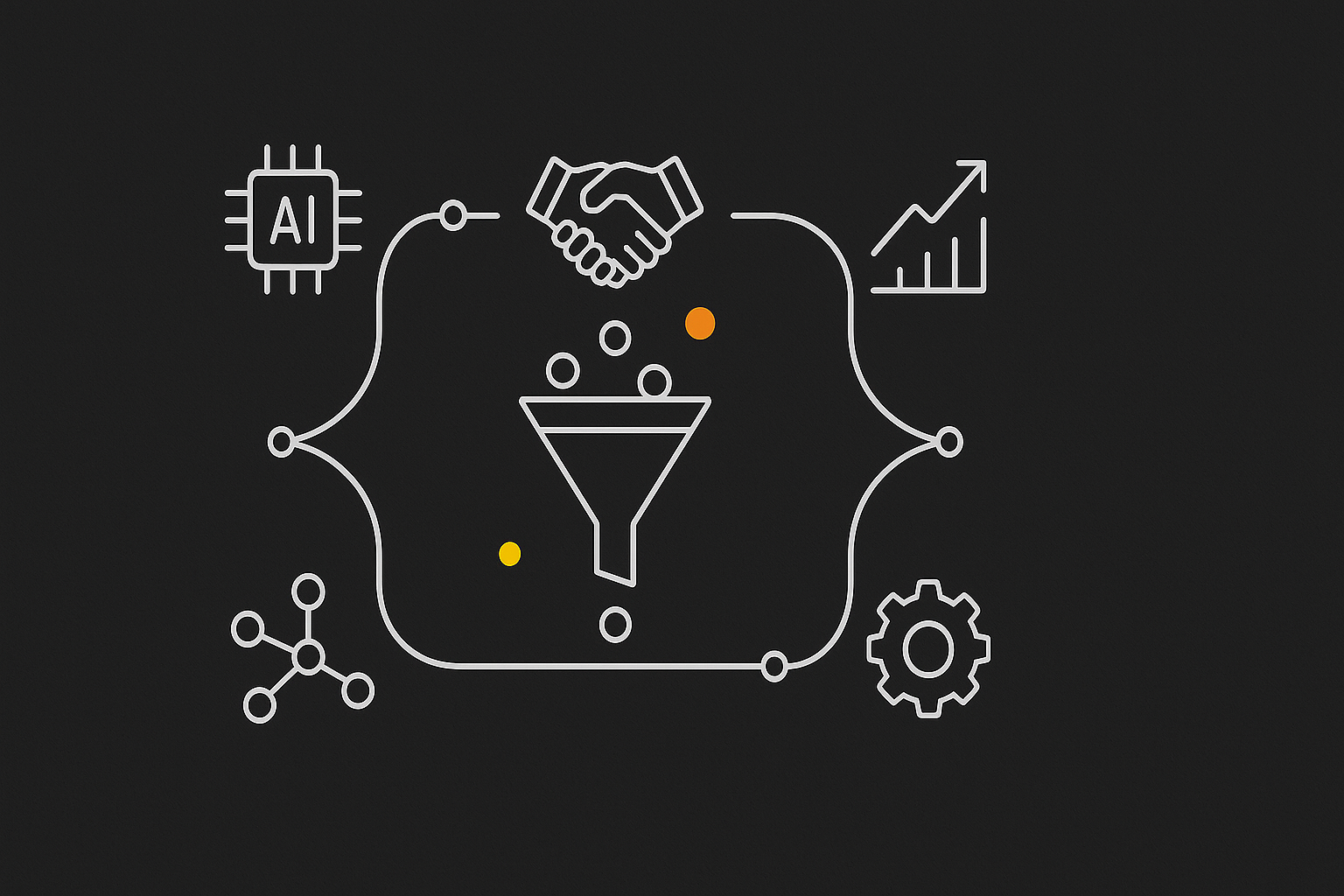
<p>By 2026, 80% of businesses will rely on integrated marketing and services to drive growth in an ever-evolving landscape. The rise of digital channels, shifting consumer behaviors, and rapid technology adoption have made the world of marketing and services more competitive and complex than ever before.</p> <p>To stay ahead, brands need adaptive strategies and comprehensive frameworks that deliver consistent results and maximize ROI. This guide gives you a clear, step-by-step approach to mastering marketing and services for success in 2026.</p> <p>Here’s what you can expect: a deep dive into key market trends, proven strategy development, service integration tactics, technology leverage, measurement methods, and future-proof recommendations—all tailored for ambitious, growth-focused organizations.</p> <h2>Key Marketing Trends Shaping 2026</h2> <p>The future of marketing and services is rapidly evolving as we approach 2026. Staying ahead means understanding the trends rewriting the rules of engagement, technology, and customer expectations. Let’s break down the most crucial shifts shaping your next strategy.</p> <img src="https://xqvnmkjynbkcujcrtubi.supabase.co/storage/v1/object/public/article-images/48edb856-1018-4843-949b-711508bc4ace/article-48edb856-1018-4843-949-a-modern-infographic-diagram-titled-2026-marketing-0-zmce1i.jpg" alt="Key Marketing Trends Shaping 2026"><h3>The Rise of AI and Automation in Marketing</h3> <p>AI is now at the heart of marketing and services, driving both innovation and efficiency. By 2024, 61% of marketers are already using AI for personalization, and that percentage is only climbing. Think AI chatbots answering queries in real time, predictive analytics forecasting next moves, or automated content creation scaling campaigns faster than ever. These technologies are transforming how brands reach and understand audiences.</p> <p>The impact is clear: campaigns become more targeted, customer experiences more seamless, and teams spend less time on repetitive tasks. Still, challenges remain. Data privacy concerns and the complexity of integrating new tools keep marketers on their toes. Human oversight is essential to ensure AI supports brand values and customer trust. For more on adoption rates and real-world stats, see <a href="https://techkv.com/ai-in-marketing-statistics/" target="_blank" rel="nofollow noopener noreferrer">AI adoption in marketing statistics</a>.</p> <h3>Omnichannel Experiences and Customer Expectations</h3> <p>Today’s customers expect marketing and services to deliver a unified experience wherever they interact. In fact, 73% of consumers want seamless journeys across every channel, whether online or in-store. Brands like Starbucks stand out by connecting rewards, mobile ordering, and in-person visits into one cohesive ecosystem.</p> <p>Achieving this requires robust technology: CRM systems, customer data platforms, and cross-channel tracking that keep messaging consistent. As brands mature in their omnichannel approach, revenue tends to grow in parallel. Unified experiences are no longer a bonus—they’re a baseline for loyalty and long-term growth.</p> <h3>Data-Driven Personalization and First-Party Data</h3> <p>Personalization is redefining marketing and services in a world where third-party cookies are fading. Brands are turning to first-party data collected through interactive content, loyalty programs, and gated offers. Retailers, for example, use purchase histories and browsing behavior to create tailored promotions that drive repeat sales.</p> <p>But with great data comes great responsibility. Regulations such as GDPR and CCPA set the ground rules for ethical data use. Those who excel at personalization gain a serious edge, offering experiences that feel custom-built for each customer. In 2026, data-driven strategies will be a key differentiator in crowded markets.</p> <h3>The Shift Toward Ethical, Sustainable Marketing</h3> <p>Transparency and sustainability are at the forefront of marketing and services. Today’s consumers demand brands show real social responsibility—not just lip service. Campaigns highlighting eco-friendly practices or fair sourcing are resonating, with 66% of customers willing to pay more for sustainable brands.</p> <p>However, authenticity is critical. Greenwashing can quickly erode trust. The brands that win are those telling honest stories and backing up claims with action. Over time, this approach builds trust and lasting brand equity, making ethics as important as ROI in future strategies.</p> <h3>Visual: Infographic - “2026 Marketing Trends at a Glance”</h3> <ul> <li>Clean, diagonal-gradient background from black to orange</li> <li>Stat blocks for: AI adoption, omnichannel demand, personalization, sustainability</li> <li>Flow indicators connect trends to show relationships</li> </ul> <p>This visual snapshot helps teams align marketing and services strategies with the trends that matter most for 2026.</p> <h2>Building a Winning Marketing Strategy for 2026</h2> <p>Crafting a future-ready marketing and services plan in 2026 requires more than guesswork. To stand out in a crowded digital space, businesses need a structured approach that blends data, creativity, and adaptability. Here’s your step-by-step roadmap to success.</p> <img src="https://xqvnmkjynbkcujcrtubi.supabase.co/storage/v1/object/public/article-images/48edb856-1018-4843-949b-711508bc4ace/article-48edb856-1018-4843-949-a-clean-technical-diagram-illustrating-the-five-st-1-j1cy33.jpg" alt="Building a Winning Marketing Strategy for 2026"><h3>Step 1: Conducting Deep Market and Audience Analysis</h3> <p>Every winning marketing and services strategy begins with understanding your audience and market landscape. Leverage social listening, competitor benchmarking, and psychographic profiling to uncover what truly drives your buyers. Studies show that 80% of marketers see audience insights as their top campaign driver.</p> <p>Use tools like Google Trends, SEMrush, and Sprout Social to get actionable data. For example, a B2B SaaS company might tailor messaging to different buyer personas, ensuring relevance. Data-driven insights help reduce wasted spend and sharpen your focus. For more actionable advice, check out these <a href="https://www.catchdigital.io/blog/marketing-strategy-service" target="_blank" rel="noopener noreferrer">marketing strategy service insights</a>.</p> <h3>Step 2: Setting SMART Goals and KPIs</h3> <p>Clear goals are the backbone of effective marketing and services. Use the SMART framework: Specific, Measurable, Achievable, Relevant, and Time-bound. For instance, aim to “increase qualified leads by 20% in 6 months.”</p> <p>Select KPIs that matter, like Customer Acquisition Cost (CAC), Customer Lifetime Value (CLV), and conversion rates. Visualizing progress with a KPI dashboard keeps your team aligned. Remember, aligning goals with business objectives ensures your efforts drive meaningful growth.</p> <h3>Step 3: Mapping the Full Customer Journey</h3> <p>Mapping the customer journey reveals every touchpoint in your marketing and services process. Break down the journey into stages: awareness, consideration, decision, and loyalty. Use journey mapping workshops and customer interviews to spot pain points.</p> <p>Picture an e-commerce funnel, from ad click to repeat purchase. Identifying friction points lets you optimize for smoother experiences and higher conversions. This approach ensures no opportunity is left on the table.</p> <h3>Step 4: Crafting a Multi-Channel Content Plan</h3> <p>A robust marketing and services plan thrives on multi-channel content. Think blogs, social media, video, podcasts, and email. By 2026, video is projected to account for 82% of all online traffic, so prioritize this format.</p> <p>Develop a content calendar and look for opportunities to repurpose material across platforms. For example, brands that leverage both TikTok and LinkedIn can reach B2B and B2C audiences simultaneously. Consistency and adaptability in your content keep your message top of mind.</p> <h3>Step 5: Allocating Budget and Resources Strategically</h3> <p>How you allocate resources can make or break your marketing and services success. Benchmark your digital marketing spend as a percentage of revenue, and prioritize high-ROI channels.</p> <p>As the market shifts, flexibility is key. Some brands are reallocating from paid ads to owned media for better long-term returns. Strategic budgeting ensures you can quickly adapt to new trends and maximize impact.</p> <h3>Visual: Simplified Table - “Strategy Development Steps & Tools”</h3> <table> <thead> <tr> <th>Step</th> <th>Key Tools</th> <th>Example Metric</th> </tr> </thead> <tbody><tr> <td>Market Analysis</td> <td>Google Trends, SEMrush</td> <td>Audience Growth</td> </tr> <tr> <td>SMART Goals</td> <td>KPI Dashboards</td> <td>Conversion Rate</td> </tr> <tr> <td>Customer Journey</td> <td>Journey Maps, Interviews</td> <td>Retention Rate</td> </tr> <tr> <td>Content Plan</td> <td>Calendars, Video Tools</td> <td>Engagement Rate</td> </tr> <tr> <td>Budgeting</td> <td>Analytics, Benchmarks</td> <td>ROI</td> </tr> </tbody></table> <p>This streamlined overview helps teams visualize the core elements of a high-performing marketing and services strategy for 2026.</p> <h2>Integrating Services for Maximum Impact</h2> <p>Effective marketing and services integration is the backbone of modern growth strategies. By aligning marketing, creative, automation, and analytics, businesses can deliver a seamless customer journey that drives superior results. According to Adobe, integrated campaigns can boost conversion rates by 23 percent. Siloed teams often struggle with inconsistent messaging and missed opportunities. To dive deeper into the benefits, see this guide on <a href="https://www.catchdigital.io/blog/marketing-and-customer-service" target="_blank" rel="noopener noreferrer">integrating marketing and customer service</a>, which explores how unified approaches fuel business growth.</p> <h3>The Importance of Service Integration</h3> <p>Service integration means combining digital, creative, automation, and analytics to form a cohesive marketing and services system. When these disciplines operate in unison, brands gain a powerful edge. For example, unified campaigns across web, ads, and email ensure consistent messaging and customer experience. Data shows that integrated efforts outperform fragmented ones, with conversion rates rising by nearly a quarter. Teams that work in silos often face duplicated work, wasted spend, and customer confusion. The key takeaway: integrated marketing and services unlock efficiency, consistency, and better ROI.</p> <h3>Building a Full-Funnel Marketing System</h3> <p>A full-funnel marketing and services approach covers every stage of the buyer’s journey, from awareness to advocacy. Each touchpoint—lead magnets, nurture sequences, retargeting—should be mapped and optimized. Imagine a SaaS company guiding leads from a webinar to a personalized upsell. This method increases customer lifetime value, as prospects are engaged at each step. By combining tactics and data, you create a scalable funnel that adapts to shifting trends. In 2026, a full-funnel marketing and services system will be essential for maximizing growth and retention.</p> <h3>Leveraging Partnerships and White-Label Solutions</h3> <p>Not every company can build every service in-house. Sometimes, the smartest marketing and services play is to partner with specialists or use white-label solutions. Agencies, for example, often scale by bringing in external expertise for PPC management or automation. The choice between outsourcing and internal development comes down to cost, speed to market, and access to expertise. By leveraging partnerships, businesses can expand offerings without overextending resources. The right mix ensures your marketing and services stack remains agile and competitive.</p> <h3>Ensuring Consistent Brand Experience Across Touchpoints</h3> <p>Consistency is vital in marketing and services. Strong brand guidelines and centralized asset management help maintain a unified look and voice across all platforms. Collaboration between marketing, sales, and support teams ensures that customers receive the same high-quality experience, whether online or in-store. For instance, retailers who align their physical and digital channels see revenue gains of up to 33 percent. By focusing on consistency, marketing and services teams build trust and long-term loyalty.</p> <h3><a href="https://catchdigital.io" target="_blank" rel="noopener noreferrer">Catch Digital: Growth Marketing Expertise</a></h3> <p>Catch Digital specializes in building scalable marketing and services systems for businesses from 1.5 million to 30 million and beyond. Their offerings include Google Ads, AI analytics, full-funnel strategy, creative, and automation—delivered with radical transparency and proprietary tracking. The company’s strategic partnership model supports enterprise-level integration and flexibility. Clients in both B2B and e-commerce have achieved predictable, measurable ROI through their tailored marketing and services approach. If your goal is seamless integration and growth, Catch Digital provides the expertise to make it happen.</p> <img src="https://xqvnmkjynbkcujcrtubi.supabase.co/storage/v1/object/public/article-images/48edb856-1018-4843-949b-711508bc4ace/1769767130023-https__catchdigitalio.jpg" alt="Marketing and Services Guide: Strategies for Success 2026 - Catch Digital: Growth Marketing Expertise"><h2>Harnessing Technology and AI for Competitive Advantage</h2> <p>The landscape of marketing and services is being reshaped by rapid advances in technology and artificial intelligence. Today, staying ahead means more than just adopting new tools. It requires a sharp strategy, data-driven decision-making, and the ability to connect every piece of your marketing and services ecosystem. Let’s break down how organizations are leveraging tech and AI to sharpen their edge and drive results.</p> <img src="https://xqvnmkjynbkcujcrtubi.supabase.co/storage/v1/object/public/article-images/48edb856-1018-4843-949b-711508bc4ace/article-48edb856-1018-4843-949-infographic-diagram-showing-a-modern-marketing-and-2-4qr99s.jpg" alt="Harnessing Technology and AI for Competitive Advantage"><h3>AI-Driven Analytics and Predictive Insights</h3> <p>AI-powered analytics are revolutionizing marketing and services by turning raw data into actionable insights. Modern dashboards can automatically segment customers, predict lead quality, and surface trends that would be nearly impossible to spot manually. For example, a retailer might use AI to analyze historical purchase data, forecast demand, and adjust advertising spend in real time. </p> <p>According to Deloitte, 53% of marketers plan to increase AI investment by 2026, reflecting its value for smarter, faster decisions. The key is combining AI’s processing power with human judgment so that marketing and services strategies remain both data-driven and adaptable.</p> <h3>Marketing Automation for Scale and Efficiency</h3> <p>Marketing and services teams are unlocking new levels of efficiency through automation platforms like HubSpot, Marketo, and ActiveCampaign. Automation handles repetitive tasks such as email nurturing, lead scoring, and dynamic content delivery, freeing up teams to focus on creativity and strategy. </p> <p>Consider a real estate agency automating follow-up emails to prospective buyers, leading to higher conversion rates and more closed deals. Automation not only saves time but also ensures consistency across every touchpoint in the marketing and services journey. The result is scalable growth and improved customer experiences.</p> <h3>Personalization Engines and Dynamic Content</h3> <p>Personalization engines are at the heart of next-level marketing and services. These tools deliver real-time website experiences, tailored offers, and product recommendations based on user behavior and preferences. A standout example is an e-commerce brand leveraging dynamic content to increase average order value with personalized product bundles.</p> <p>The impact is clear: personalized experiences can boost sales by 20%, according to Epsilon. For more on how AI is powering personalization, see these <a href="https://www.influencermarketinghub.com/ai-marketing-benchmark-report/" target="_blank" rel="nofollow noopener noreferrer">Data-driven personalization strategies</a>. The winning formula is blending automation with authentic, human-centric messaging—ensuring marketing and services feel both smart and personal.</p> <h3>Integrating MarTech Stacks Seamlessly</h3> <p>A unified MarTech stack is essential for effective marketing and services. Yet, many companies face challenges like data silos and complex integrations. The solution? Use API connectors and unified data platforms to bring together CRM, advertising, and analytics tools.</p> <p>For instance, a B2B firm might sync its CRM with ad platforms and analytics dashboards, enabling true omnichannel insights. This integration empowers marketing and services teams to act on real-time data, personalize outreach, and measure results across every channel. Seamless tech stacks are the backbone of modern, agile marketing and services.</p> <h3>Visual: Infographic - “AI & Tech Stack for 2026 Marketing Success”</h3> <table> <thead> <tr> <th>Tech Layer</th> <th>Key Function</th> <th>Example Platform</th> <th>Stat Callout</th> </tr> </thead> <tbody><tr> <td>Data Sources</td> <td>Customer & behavior tracking</td> <td>CRM, Website, Social</td> <td>53% plan more AI investment by 2026</td> </tr> <tr> <td>Automation Engines</td> <td>Campaign & journey automation</td> <td>HubSpot, Marketo</td> <td>20% sales lift from personalization</td> </tr> <tr> <td>Analytics</td> <td>Predictive insights & segmentation</td> <td>Google Analytics 4</td> <td>Unified stacks drive omnichannel ROI</td> </tr> <tr> <td>Output Channels</td> <td>Delivery across web, ads, email</td> <td>Ad Platforms, Email</td> <td></td> </tr> </tbody></table> <p>A clear, integrated stack enables marketing and services teams to move fast, optimize campaigns, and deliver value at every stage. The right tech foundation is what separates leaders from the pack.</p> <h2>Measuring Success and Optimizing for Growth</h2> <p>To achieve lasting results with your marketing and services, you need to measure what matters and adapt quickly. Growth is not a one-time event; it’s a continuous process of learning, testing, and optimizing. Let’s break down the essential steps to track, analyze, and fuel your marketing and services for ongoing success.</p> <div data-youtube-video> <iframe src="https://www.youtube.com/embed/ZT4r1kUmN34" frameborder="0" allowfullscreen data-type="youtube" data-youtube-video-id="ZT4r1kUmN34" ></iframe> </div> <h3>Setting Up Robust Analytics and Attribution Models</h3> <p>The foundation of effective marketing and services is a solid analytics setup. Start by choosing the right attribution model for your business, whether it’s last-click, multi-touch, or data-driven. Leading tools like Google Analytics 4, Mixpanel, or custom dashboards can help you identify which channels drive the most value.</p> <p>For example, a SaaS provider might use data-driven attribution to track which touchpoints contribute most to conversions. This clarity empowers teams to allocate resources for marketing and services more effectively. Remember, accurate attribution is the compass for smarter budget decisions.</p> <h3>Tracking and Interpreting Key Performance Metrics</h3> <p>Once your analytics are in place, focus on the metrics that truly move the needle. Track customer acquisition cost (CAC), return on ad spend (ROAS), customer lifetime value (CLV), and engagement rates. A well-designed KPI dashboard brings these numbers to life, making trends and gaps easy to spot.</p> <p>According to Forrester, 67% of marketers struggle with actionable reporting. Solve this by establishing regular reporting cadences and upskilling your team in data literacy. For a deeper dive into optimizing your ROI, explore this guide to <a href="https://www.catchdigital.io/blog/roi-marketing-services" target="_blank" rel="noopener noreferrer">ROI-focused marketing services</a>.</p> <h3>Continuous Testing: A/B and Multivariate Approaches</h3> <p>Optimization in marketing and services never stops. A/B and multivariate testing are your best friends for unlocking incremental gains. Test everything, from landing page headlines to call-to-action buttons and email subject lines.</p> <p>Take an e-commerce brand, for example—they boosted conversions by iteratively testing different product page layouts. Platforms like Optimizely and Google Optimize make it easier to run experiments and learn fast. Over time, these small improvements compound to deliver big results.</p> <h3>Feedback Loops and Agile Marketing Iteration</h3> <p>To keep your marketing and services adaptive, build feedback loops into every campaign. Collect customer feedback through surveys, NPS, and real-time reviews. Then, use agile marketing sprints to iterate on messaging, creative, and targeting.</p> <p>A B2B company might pivot its approach mid-quarter after spotting a shift in customer sentiment. Agility is your edge: teams that adapt quickly outperform those that stick to rigid plans. For more on evolving your strategies, check out these <a href="https://www.catchdigital.io/blog/marketing-driven" target="_blank" rel="noopener noreferrer">marketing-driven growth strategies</a>.</p> <h3>Visual: Stat Block - “Growth Optimization in Numbers”</h3> <table> <thead> <tr> <th>Metric</th> <th>Typical Lift / Insight</th> <th>Why It Matters</th> </tr> </thead> <tbody><tr> <td>Conversion rate lift from testing</td> <td>+15–30%</td> <td>Direct impact on revenue</td> </tr> <tr> <td>Attribution model accuracy</td> <td>Up to 40% improvement</td> <td>Smarter spend allocation</td> </tr> <tr> <td>Reporting frequency</td> <td>Weekly or biweekly</td> <td>Keeps teams aligned</td> </tr> </tbody></table> <p><em>Stat block with minimalist design, black-to-yellow gradient, and dotted arrows showing how measurement feeds continual marketing and services improvement.</em></p> <h2>Future-Proofing Your Marketing and Services Approach</h2> <p>To thrive in 2026, future-proofing your marketing and services approach is not optional—it is essential. The landscape is changing fast, and proactive strategies are your ticket to sustainable success.</p> <h3>Anticipating Emerging Technologies and Consumer Behaviors</h3> <p>Staying ahead in marketing and services means embracing innovation before it becomes mainstream. AR and VR are shifting the customer experience, with retailers piloting virtual shopping to engage digital-native audiences. Voice search continues to surge, with 40% of Gen Z using it daily, making conversational marketing a must.</p> <p>Blockchain is also entering the marketing and services toolkit, offering new ways to ensure transparency and data security. As AI adoption accelerates—78% of organizations now use AI in at least one business function, according to <a href="https://www.amraandelma.com/artificial-intelligence-marketing-statistics/" target="_blank" rel="nofollow noopener noreferrer">Ethical and sustainable marketing practices</a>—marketers must balance automation with ethical considerations. Early adoption of these trends can give your brand a real edge.</p> <h3>Building an Adaptive, Learning Organization</h3> <p>To keep your marketing and services strategy resilient, invest in your team’s growth. Ongoing training, peer learning, and certifications are key to staying relevant. Workshops on AI, data literacy, and omnichannel tactics help teams anticipate change rather than react to it.</p> <p>Companies that prioritize upskilling in marketing and services see twice the growth of their competitors, according to LinkedIn. Encourage curiosity and experimentation—being open to new approaches creates a culture that thrives on transformation.</p> <h3>Scenario Planning and Risk Management</h3> <p>The future is unpredictable, but you can build resilience into your marketing and services approach. Use SWOT analysis, scenario mapping, and contingency planning to prepare for shifts in technology, consumer trends, or economic conditions.</p> <p>For example, brands that mapped out crisis responses during recent economic changes adapted their marketing and services faster and more effectively. Regularly reviewing scenarios ensures your strategy is not just reactive but prepared for anything.</p> <h3>Visual: Flow Chart - “Future-Proofing Your Marketing Strategy”</h3> <table> <thead> <tr> <th>Step</th> <th>Description</th> <th>Example Tool/Action</th> </tr> </thead> <tbody><tr> <td>Trend Tracking</td> <td>Monitor emerging tech and behaviors</td> <td>AR/VR pilots, voice search research</td> </tr> <tr> <td>Skill Development</td> <td>Upskill teams with training and certifications</td> <td>AI workshops, marketing certifications</td> </tr> <tr> <td>Scenario Planning</td> <td>Map risks and create contingency plans</td> <td>SWOT analysis, scenario mapping</td> </tr> </tbody></table> <p>This flow chart captures the essential stages for future-proofing marketing and services. Each step is interconnected, ensuring your organization stays agile and growth-ready.<br><br>Now that you’ve seen how smart strategy, integrated services, and a bit of future-minded creativity can transform your marketing in 2026, you might be wondering how to turn those insights into real results for your business. That’s exactly where Catch Digital comes in. If you’re ready to map out a growth system built on transparency, cutting-edge tools, and a partnership mindset, let’s put our heads together. You don’t have to navigate the complexity alone—let’s find the right path for your goals, your market, and your vision.<br><a href="https://www.catchdigital.io/book-a-consultation" target="_blank" rel="noopener noreferrer">Book a Strategy Call</a></p>