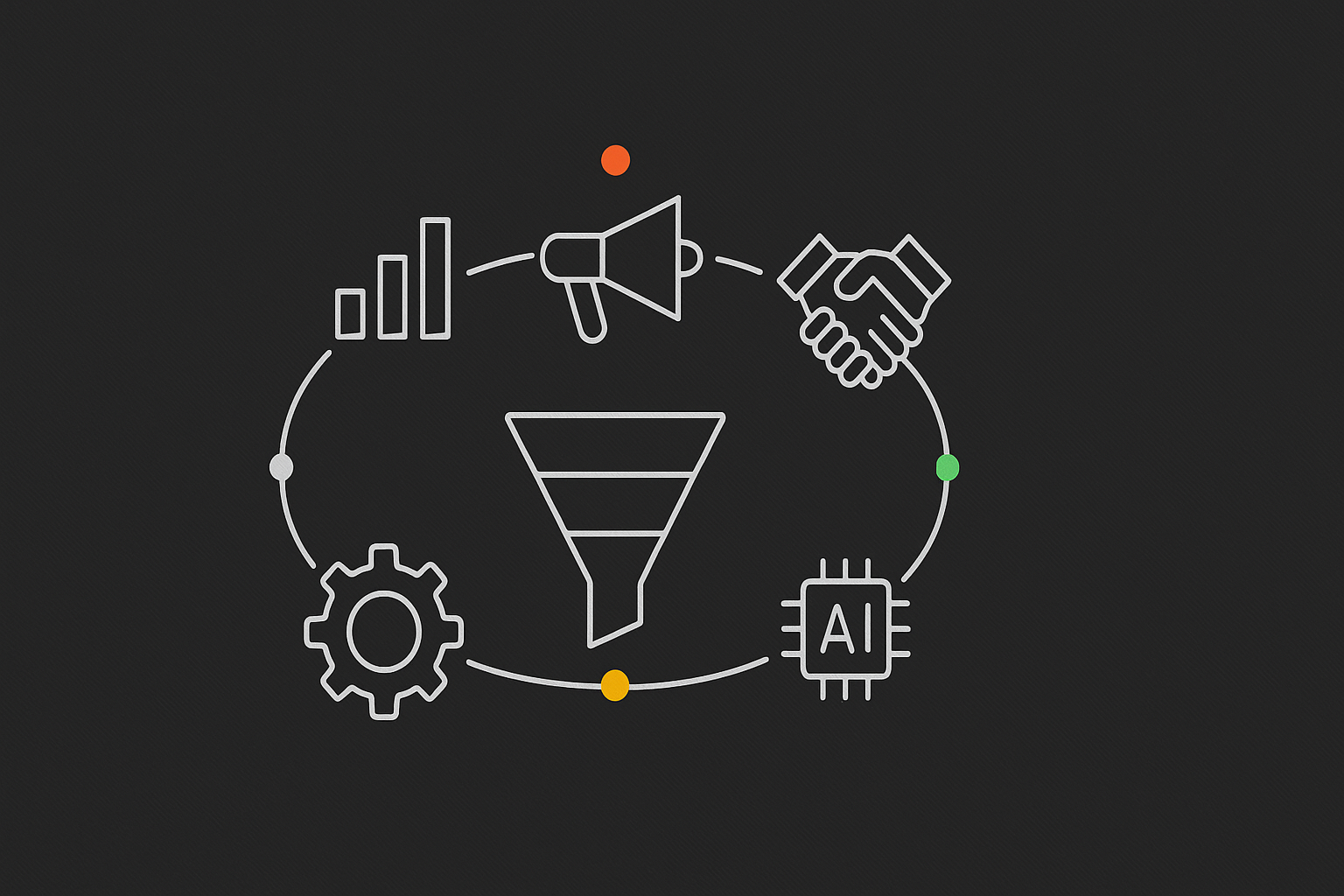
<p>By 2026, 72% of high-growth businesses will fully integrate project management and marketing to drive results. The digital landscape is evolving at breakneck speed, fueled by AI, smarter tech, and shifting customer demands. To stay ahead, mastering both project management and marketing is now mission-critical for sustained growth and a true competitive edge. In this guide, you’ll get actionable, up-to-date strategies that blend these disciplines for success in 2026. We’ll break down the latest trends, proven frameworks, cutting-edge technology, team collaboration tactics, measurement tools, and how to future-proof your approach.</p> <h2>The Evolving Landscape of Project Management and Marketing in 2026</h2> <p>The world of project management and marketing is changing at warp speed. As we look toward 2026, these two fields are blending together, creating new ways for businesses to stay ahead. Companies now realize that seamless coordination between project management and marketing is no longer optional—it is a must for growth and agility.</p> <img src="https://xqvnmkjynbkcujcrtubi.supabase.co/storage/v1/object/public/article-images/104ee5eb-d32d-4932-9c12-d2efe691e2dc/article-104ee5eb-d32d-4932-9c1-a-sleek-modern-infographic-diagram-showing-the-con-0-q0zk19.jpg" alt="The Evolving Landscape of Project Management and Marketing in 2026"><h3>Convergence of Project Management and Marketing Roles</h3> <p>The boundaries between project management and marketing roles are fading fast. In 2026, we see more professionals stepping into hybrid positions that demand skills from both arenas. Cross-functional teams are the new standard, blending creative marketers with detail-oriented project leads.</p> <p>For example, SaaS companies often appoint “Growth Leads” who oversee both campaign execution and project delivery. These leaders drive results by uniting strategy, timelines, and outcomes under one umbrella. This shift means project management and marketing are no longer siloed—they are deeply connected in daily operations.</p> <h3>Key Trends Shaping 2026</h3> <p>Several powerful trends are reshaping project management and marketing. AI-driven automation is taking center stage, streamlining workflows and freeing up teams to focus on strategy. According to Gartner, 80 percent of marketing tasks will be automated by 2026.</p> <p>Agile frameworks like Scrum and Kanban are now essential, as teams must pivot quickly in response to market shifts. Remote and distributed teams have become the default, not the exception. Customer-centricity and personalization at scale set the bar for engagement.</p> <p>To dive deeper into how automation is transforming these disciplines, explore <a href="https://www.ravetree.com/project-management-trends-2025-key-insights" target="_blank" rel="nofollow noopener noreferrer">AI-driven automation in project management</a>.</p> <h3>Challenges and Opportunities</h3> <p>The integration of project management and marketing brings both complexity and opportunity. Managing multiple platforms and tools can overwhelm teams if not handled strategically. Balancing creative freedom with operational efficiency is a constant challenge.</p> <p>Data privacy and evolving regulations add another layer of difficulty. Yet, those who leverage automation to scale campaigns without losing quality can outperform competitors. The key is to use integrated solutions that bridge the gap between vision and execution for project management and marketing.</p> <h3>Real-World Example</h3> <p>Let’s look at a B2B company that unified its project management and marketing teams. By centralizing their processes and tools, they cut campaign launch times by 30 percent. This allowed them to seize market opportunities faster than before.</p> <p>Their approach relied on cross-functional squads, shared KPIs, and real-time dashboards. The result? More efficient workflows, fewer bottlenecks, and stronger alignment across departments. This case proves that when project management and marketing are in sync, speed and innovation soar.</p> <h3>Future Skills and Competencies</h3> <p>To thrive in 2026, teams need a new skill set. Data literacy is critical—everyone must be comfortable interpreting analytics to inform strategy. Adopting AI tools is no longer just for tech-savvy specialists; it is a core expectation in project management and marketing.</p> <p>Cross-functional leadership, change management, and adaptability are top priorities. Upskilling in these areas ensures professionals can navigate the ever-evolving landscape, drive results, and keep their organizations ahead of the curve.</p> <h2>Strategic Frameworks for Integrated Project Management and Marketing</h2> <p>Setting a solid foundation for project management and marketing starts with clear objectives and measurable outcomes. Modern teams align marketing goals directly with business results, using frameworks like OKRs (Objectives and Key Results) and SMART goals to drive focus. For example, an e-commerce brand might set an OKR to increase Q2 sales by 20 percent, tying campaign milestones to product launches. Adopting best practices from resources like <a href="https://www.catchdigital.io/blog/digital-marketing-project-management" target="_blank" rel="noopener noreferrer">Digital Marketing Project Management</a> ensures everyone is on the same page from kick-off to wrap-up. This clarity turns ambitious visions into actionable roadmaps, boosting accountability and transparency across teams.</p> <img src="https://xqvnmkjynbkcujcrtubi.supabase.co/storage/v1/object/public/article-images/104ee5eb-d32d-4932-9c12-d2efe691e2dc/article-104ee5eb-d32d-4932-9c1-informational-diagram-showing-an-integrated-projec-1-t1psic.jpg" alt="Strategic Frameworks for Integrated Project Management and Marketing"><h3>Setting Clear Objectives and KPIs</h3> <p>Defining objectives is the launchpad for every successful project management and marketing initiative. Teams must connect marketing KPIs—like lead volume, conversion rates, or customer lifetime value—to broader business outcomes. OKRs help teams track both ambitious goals and the practical steps needed to reach them. SMART goals, with their focus on specificity and time frames, keep campaigns grounded in reality. For instance, a SaaS brand could use SMART goals to synchronize a new feature launch with a multi-channel campaign, ensuring every department works toward the same finish line. This strategic unity fuels efficient execution and stronger results.</p> <h3>Full-Funnel Planning and Execution</h3> <p>Integrated project management and marketing means mapping the entire customer journey, from first touch to post-purchase retention. Teams break down the funnel into phases—awareness, consideration, conversion, loyalty—and align each with clear project milestones. Visualizing this journey with an infographic helps everyone understand how campaign phases support the overall strategy. For example, content creation might be tied to the awareness stage, while CRM automation powers retention. This approach ensures no step is overlooked and resources are allocated where they have the most impact.</p> <h3>Agile and Iterative Approaches</h3> <p>Agile frameworks are transforming project management and marketing by enabling rapid testing, learning, and adaptation. With sprint planning, teams can launch campaigns, analyze performance, and iterate quickly based on real-time feedback. According to AgileSherpas, 60 percent of top-performing marketing teams now use Agile, highlighting its value for dynamic environments. Sprint retrospectives reveal what worked and what needs tweaking, which keeps momentum high and learning continuous. Agile makes it easier to pivot when market trends shift or campaign results fall short.</p> <h3>Resource Allocation and Stakeholder Management</h3> <p>Effective project management and marketing require crystal-clear roles, responsibilities, and budgets. Resource allocation starts with identifying who owns each part of the process—from creative to analytics to deployment. Stakeholder mapping is the secret weapon for cross-departmental buy-in, ensuring everyone knows their part and when to deliver. For large campaigns, managing expectations and communication flow is vital. Regular check-ins and clear documentation prevent confusion and keep projects moving forward smoothly.</p> <h3>Risk Management and Contingency Planning</h3> <p>Every integrated project management and marketing strategy must address risks before they derail progress. Teams identify potential bottlenecks early, such as resource shortages, tech hiccups, or regulatory changes. Building contingency plans keeps campaigns on track even when surprises pop up. For example, if a creative asset is delayed, having backup content or flexible timelines ensures the campaign does not stall. Proactive risk management turns challenges into opportunities for smarter execution.</p> <h3>Example: Marketing-Driven Product Launch</h3> <p>Consider a step-by-step breakdown of a successful product launch using integrated frameworks. First, teams define OKRs and align them with campaign phases. Next, they map the customer journey and set key milestones for each funnel stage. Agile sprints power content development and deployment, while stakeholders review progress at each checkpoint. Risk assessments and contingency plans are built in. Finally, real-time dashboards track KPIs, enabling fast adjustments. This holistic approach unites project management and marketing for faster, more impactful launches.</p> <h3>Measurement and Continuous Improvement</h3> <p>Measurement is the heartbeat of integrated project management and marketing. Teams set up feedback loops using data dashboards to monitor progress in real time. Continuous improvement depends on analyzing results, running A/B tests, and holding regular retrospectives. These insights fuel smarter decisions, helping teams optimize campaigns and project workflows with every iteration. By embedding measurement into the process, organizations ensure that every campaign delivers maximum value and stays ahead of the curve.</p> <h2>Technology and Tools Powering Project Management & Marketing in 2026</h2> <p>The future of project management and marketing is being written in code, dashboards, and smart integrations. As we look to 2026, the right technology stack can mean the difference between falling behind and leading the charge. From AI-driven automation to unified collaboration suites, let’s break down the essential tools transforming how teams operate, innovate, and deliver results.</p> <img src="https://xqvnmkjynbkcujcrtubi.supabase.co/storage/v1/object/public/article-images/104ee5eb-d32d-4932-9c12-d2efe691e2dc/article-104ee5eb-d32d-4932-9c1-a-clean-infographic-style-schematic-showing-an-int-2-hkc1pk.jpg" alt="Technology and Tools Powering Project Management & Marketing in 2026"><h3>AI and Automation Platforms</h3> <p>Artificial intelligence is now the backbone of project management and marketing. AI-powered tools streamline campaign optimization, automate repetitive tasks, and personalize content at scale. Imagine launching a campaign where AI not only predicts the best-performing creative but also schedules, monitors, and reports on outcomes—freeing teams to focus on strategy.</p> <p>Platforms like Monday.com, Asana, and Trello have evolved, integrating marketing features that automate workflows, suggest next steps, and surface actionable insights. AI-driven chatbots handle campaign queries, while machine learning models analyze consumer data for smarter targeting.</p> <p>Curious about where AI is heading? Explore the top <a href="https://www.allstarsit.com/blog/5-ai-marketing-automation-trends" target="_blank" rel="nofollow noopener noreferrer">AI marketing automation trends for 2026</a> to see how automation will further blur the lines between project management and marketing.</p> <h3>Unified Work Management Systems</h3> <p>All-in-one platforms are the new command centers for collaboration. With remote and hybrid teams now standard, tools like ClickUp and Wrike offer integrated spaces for project management and marketing workflows. These platforms centralize tasks, timelines, files, and communication, reducing friction and boosting transparency.</p> <p><strong>Comparison Table: Leading Unified Work Management Systems</strong></p> <table> <thead> <tr> <th>Platform</th> <th>Best For</th> <th>Key Features</th> <th>Integration Level</th> </tr> </thead> <tbody><tr> <td>ClickUp</td> <td>Marketing agencies</td> <td>Custom dashboards, Docs, Goals</td> <td>High</td> </tr> <tr> <td>Wrike</td> <td>Cross-functional teams</td> <td>Gantt charts, Proofing, Automations</td> <td>High</td> </tr> <tr> <td>Asana</td> <td>Campaign planning</td> <td>Timeline, Portfolios, Forms</td> <td>Medium</td> </tr> <tr> <td>Monday.com</td> <td>SMBs and startups</td> <td>Workflow automation, Templates</td> <td>Medium</td> </tr> </tbody></table> <p>Choosing the right platform can dramatically improve the efficiency of both project management and marketing teams.</p> <h3>Marketing Technology (MarTech) Stack Evolution</h3> <p>The MarTech stack is no longer just a collection of point solutions. In 2026, seamless integration is the expectation. Project management and marketing platforms connect directly to CRMs like Salesforce and HubSpot, automation tools such as Marketo, and analytics suites—all to eliminate silos.</p> <p>This integration enables marketing teams to track customer journeys, automate follow-ups, and manage projects from a single source of truth. The result? Faster execution, better data, and real-time collaboration across every stage.</p> <h3>Data and Analytics Tools</h3> <p>Analytics are now mission control for project management and marketing. Real-time dashboards provide instant visibility into campaign performance, resource allocation, and project milestones. Predictive analytics tools help teams forecast outcomes, allocate budgets, and adjust strategies before issues arise.</p> <p>According to Salesforce, 74% of marketers consider analytics critical for decision-making. Integrating analytics directly into your workflow ensures every decision is backed by data, not guesswork.</p> <h3>Security, Privacy, and Compliance</h3> <p>With regulations tightening, managing GDPR, CCPA, and other data standards is non-negotiable. Modern project management and marketing stacks include built-in compliance modules, automated audits, and customizable permission controls.</p> <p>Privacy-first tools safeguard customer data, ensuring trust and regulatory alignment. Teams can focus on creativity and growth, knowing their foundations are secure.</p> <h3>Emerging Technologies</h3> <p>The horizon is packed with innovation. Blockchain is being piloted for project transparency and smart contracts, providing immutable records and automating stakeholder agreements. AR and VR are making their way into campaign planning and presentations, offering immersive experiences for both internal teams and clients.</p> <p>These technologies are not just buzzwords. They are practical tools that can differentiate a brand’s approach to project management and marketing.</p> <h3>Example: Tech Stack for a 2026 Marketing Team</h3> <p>A mid-market business in 2026 might rely on:</p> <ul> <li><strong>AI-powered project management:</strong> Monday.com or Asana, automating task assignments and reporting.</li> <li><strong>Unified work platform:</strong> ClickUp, centralizing campaign assets and feedback.</li> <li><strong>MarTech integration:</strong> HubSpot CRM linked to Marketo for automation and Salesforce for sales alignment.</li> <li><strong>Analytics:</strong> Real-time dashboards in Tableau or Google Data Studio.</li> <li><strong>Compliance tools:</strong> Automated GDPR/CCPA modules and permission controls.</li> <li><strong>Emerging tech:</strong> Blockchain ledger for project milestones, AR presentations for stakeholders.</li> </ul> <p>The right combination of these tools empowers project management and marketing teams to adapt quickly, collaborate seamlessly, and drive measurable results.</p> <h2>Building High-Performance Cross-Functional Teams</h2> <p>The future of project management and marketing hinges on how well teams collaborate across roles, skills, and perspectives. In 2026, high-performing teams are the engine that drives both innovation and execution. Let’s explore what makes these teams thrive, from structure to culture and everything in between.</p> <img src="https://xqvnmkjynbkcujcrtubi.supabase.co/storage/v1/object/public/article-images/104ee5eb-d32d-4932-9c12-d2efe691e2dc/article-104ee5eb-d32d-4932-9c1-a-modern-clean-informational-diagram-comparing-mat-3-zw6h2r.jpg" alt="Building High-Performance Cross-Functional Teams"><h3>Team Structures for 2026</h3> <p>Cross-functional teams are redefining project management and marketing by breaking down silos and encouraging shared accountability. Two primary structures lead the way: matrix and pod-based teams. Matrix structures enable flexible resource allocation, while pod-based models group diverse roles around specific goals.</p> <p>For example, SaaS companies often use pods where a Growth Lead manages both campaign execution and project delivery. This hybrid role supports agility and clear ownership. Upskilling is essential as teams adapt to new technologies and shifting demands.</p> <p>To dive deeper into building these teams, see <a href="https://www.catchdigital.io/blog/digital-marketing-team" target="_blank" rel="noopener noreferrer">Building Effective Digital Marketing Teams</a>.</p> <h3>Collaboration Best Practices</h3> <p>Seamless collaboration is the foundation of successful project management and marketing. Remote and distributed teams use asynchronous communication to keep work flowing across time zones. Tools like Slack, Microsoft Teams, and Notion centralize knowledge and speed up decision-making.</p> <p>Consider this ideal workflow:</p> <ul> <li>Daily async check-ins for alignment</li> <li>Shared digital workspaces for project tracking</li> <li>Regular retrospectives to review outcomes</li> </ul> <p>A clear, transparent process keeps everyone moving in sync.</p> <h3>Leadership and Change Management</h3> <p>Strong leadership is vital as project management and marketing undergo rapid digital transformation. Leaders must champion change, foster resilience, and provide ongoing training to keep teams ahead of the curve.</p> <p>Investing in leadership development programs pays off. Focus on cross-functional leadership, data literacy, and emotional intelligence. When teams trust their leaders, they’re more likely to embrace new tools and workflows.</p> <h3>Diversity, Equity, and Inclusion (DEI) in Teams</h3> <p>Diverse teams consistently outperform homogeneous ones in project management and marketing. Research from McKinsey confirms that businesses with greater gender and ethnic diversity see higher creativity and financial returns.</p> <p>Key DEI strategies include:</p> <ul> <li>Hiring from varied backgrounds</li> <li>Creating safe spaces for all voices</li> <li>Measuring inclusion as a business metric</li> </ul> <p>Inclusive cultures foster innovation and unlock new market opportunities.</p> <h3>Conflict Resolution and Psychological Safety</h3> <p>Every high-performing team faces challenges. The difference is how they address them. Psychological safety, where team members feel safe to share ideas and concerns, is a hallmark of effective project management and marketing.</p> <p>Regular retrospective meetings provide a structured forum for feedback and improvement. Building trust means celebrating small wins and addressing issues openly, not sweeping them under the rug.</p> <h3>Performance Management and Recognition</h3> <p>Tracking progress is crucial for cross-functional teams. Set clear KPIs that align with project management and marketing objectives. Use real-time dashboards to visualize progress and spot bottlenecks early.</p> <p>Recognition keeps teams motivated. Celebrate wins during quarterly reviews or shoutouts in team meetings. In one B2B marketing team, regular recognition led to higher engagement and faster delivery times.</p> <h2>Measuring Success: KPIs, Analytics, and ROI in 2026</h2> <p>Success in project management and marketing is no longer just about ticking boxes or hitting deadlines. In 2026, it's about measuring what truly matters, adapting quickly, and proving value in real time. Let's break down how leading teams are redefining measurement, analytics, and ROI for a new era.</p> <h3>Defining Success Metrics</h3> <p>Choosing the right KPIs is the foundation of effective project management and marketing measurement. Teams are moving beyond vanity metrics and focusing on indicators that connect marketing impact to business outcomes.</p> <p>Key KPIs for 2026 include:</p> <ul> <li>Time-to-market for campaigns or product launches</li> <li>Campaign ROI and pipeline contribution</li> <li>Customer acquisition cost (CAC) and lead velocity</li> <li>Project delivery times and milestone completion rates</li> </ul> <table> <thead> <tr> <th>KPI</th> <th>What It Measures</th> <th>Why It Matters</th> </tr> </thead> <tbody><tr> <td>Time-to-market</td> <td>Speed of campaign execution</td> <td>Faster response to market shifts</td> </tr> <tr> <td>Campaign ROI</td> <td>Value generated vs. spend</td> <td>Proves marketing effectiveness</td> </tr> <tr> <td>Lead Velocity</td> <td>Rate of qualified leads</td> <td>Gauges growth and momentum</td> </tr> <tr> <td>Project Delivery Time</td> <td>Completion speed</td> <td>Reflects operational efficiency</td> </tr> </tbody></table> <p>By aligning these metrics, project management and marketing teams can ensure they're driving real business value.</p> <h3>Attribution Models and Multi-Touch Analytics</h3> <p>Attribution is more complex than ever. In 2026, last-click models are out, and multi-touch attribution is the new standard. Teams track every step of the customer journey, assigning value to each interaction.</p> <p>Popular attribution models include:</p> <ul> <li>Linear: Equal credit to all touchpoints</li> <li>Time decay: More credit to recent actions</li> <li>Position-based: Emphasizes first and last interactions</li> </ul> <p>Multi-touch analytics reveal which efforts truly move the needle. For teams looking to master this, the <a href="https://www.catchdigital.io/blog/advanced-utm-attribution-tracking-guide" target="_blank" rel="noopener noreferrer">Advanced UTM Attribution Tracking Guide</a> offers practical steps for capturing, analyzing, and acting on attribution data.</p> <p>This depth of insight ensures project management and marketing investments reach their full potential.</p> <h3>Real-Time Dashboards and Reporting</h3> <p>Static reports are giving way to real-time dashboards. These dynamic tools empower teams to visualize campaign and project performance as it happens, making data-driven decisions on the fly.</p> <p>A well-designed dashboard might include:</p> <ul> <li>Live campaign ROI and spend tracking</li> <li>Project milestone progress bars</li> <li>Pipeline health and lead velocity indicators</li> <li>Custom widgets for stakeholder priorities</li> </ul> <p>By connecting project management and marketing data in one place, dashboards simplify collaboration and keep everyone aligned.</p> <h3>Continuous Feedback and Optimization</h3> <p>Measurement doesn't end with reporting. High-performing teams build feedback loops into every project management and marketing initiative. This means running A/B tests, conducting sprint retrospectives, and using analytics to refine strategies.</p> <p>Iterative optimization looks like:</p> <ul> <li>Testing new creative assets and CTAs</li> <li>Adjusting project timelines based on team velocity</li> <li>Reallocating resources to high-performing channels</li> </ul> <p>This approach transforms data into action, ensuring teams adapt to market changes quickly.</p> <h3>Proving ROI to Leadership</h3> <p>Translating data into business impact is essential for securing buy-in and budget. To make the case, project management and marketing leaders must link KPIs to revenue, cost savings, and strategic goals.</p> <p>Effective strategies include:</p> <ul> <li>Building business cases with clear before-and-after metrics</li> <li>Visualizing ROI trends over time</li> <li>Highlighting wins from integrated project management and marketing efforts</li> </ul> <p>For more on connecting measurement to growth, see <a href="https://www.catchdigital.io/blog/growth-digital-marketing" target="_blank" rel="noopener noreferrer">Growth Digital Marketing Strategies</a>.</p> <h3>Overcoming Measurement Challenges</h3> <p>Despite advances, measurement isn't without hurdles. Data silos, inconsistent definitions, and integration gaps can cloud insights. The solution? Aligning project management and marketing data sources, standardizing KPIs, and investing in unified analytics tools.</p> <p>Key steps to overcome challenges:</p> <ul> <li>Centralize data in a single platform</li> <li>Define KPIs collaboratively across teams</li> <li>Regularly audit data quality and reporting processes</li> </ul> <p>By addressing these obstacles, teams can unlock the full potential of project management and marketing analytics.</p> <h2>Future-Proofing: Preparing for the Next Wave of Change</h2> <p>Staying ahead in project management and marketing means anticipating the unexpected. The landscape is evolving rapidly, and leaders who future-proof their strategies today will thrive tomorrow. Let’s explore how to build resilience and stay ready for what’s next.</p> <p><strong>Anticipate Emerging Trends</strong></p> <p>The project management and marketing space is being reshaped by AI, automation, and new digital channels. AI-driven personalization will become standard, while voice search and Web3 marketing are on the horizon. Regulatory changes will continue, making agility essential for compliance and innovation. For a deep dive into how intelligent work management will shape the future, see <a href="https://www.smartsheet.com/ppm-priorities-report-2026" target="_blank" rel="nofollow noopener noreferrer">Intelligent work management in 2026</a>.</p> <p><strong>Upskill and Learn Continuously</strong></p> <p>Teams must prioritize ongoing education to keep pace. Upskilling in data literacy, AI adoption, and cross-functional leadership is critical. Certifications from trusted platforms and regular training will help your team stay competitive in project management and marketing.</p> <p><strong>Build Resilient Systems and Processes</strong></p> <p>Design workflows that can adapt to rapid change. Scenario planning is key—simulate disruptions and test your response strategies. This approach ensures both stability and flexibility, which are must-haves in project management and marketing today.</p> <p><strong>Foster a Culture of Innovation</strong></p> <p>Encourage experimentation and calculated risk-taking. Internal hackathons or innovation sprints can spark breakthrough campaigns and keep creative energy high across your project management and marketing teams.</p> <p><strong>Leverage Strategic Partnerships</strong></p> <p>Consider when to partner with agencies or consultants. Look for partners who bring deep expertise and a track record of adapting to change. This can infuse fresh ideas and specialized skills into your project management and marketing initiatives.</p> <p><strong>Conclusion</strong></p> <p>Future-proofing means more than reacting to trends—it’s about building a culture and system that thrives on change. By investing in skills, resilient processes, and innovation, you’ll ensure your project management and marketing efforts lead from the front, whatever the future brings.<br><br>If you’re ready to put these 2026-ready strategies into action and want a growth partner who actually gets how project management fuels marketing success, let’s talk. At Catch Digital, we’re obsessed with building predictable, scalable systems that drive real results—combining data, creativity, and tech in a way that just works. Whether you’re looking to streamline workflows, integrate AI, or simply get more ROI from your campaigns, we’re here to help you make it happen. Curious how this all applies to your business? <a href="https://www.catchdigital.io/book-a-consultation" target="_blank" rel="noopener noreferrer">Book a Strategy Call</a> and let’s map out your next big leap together.</p>