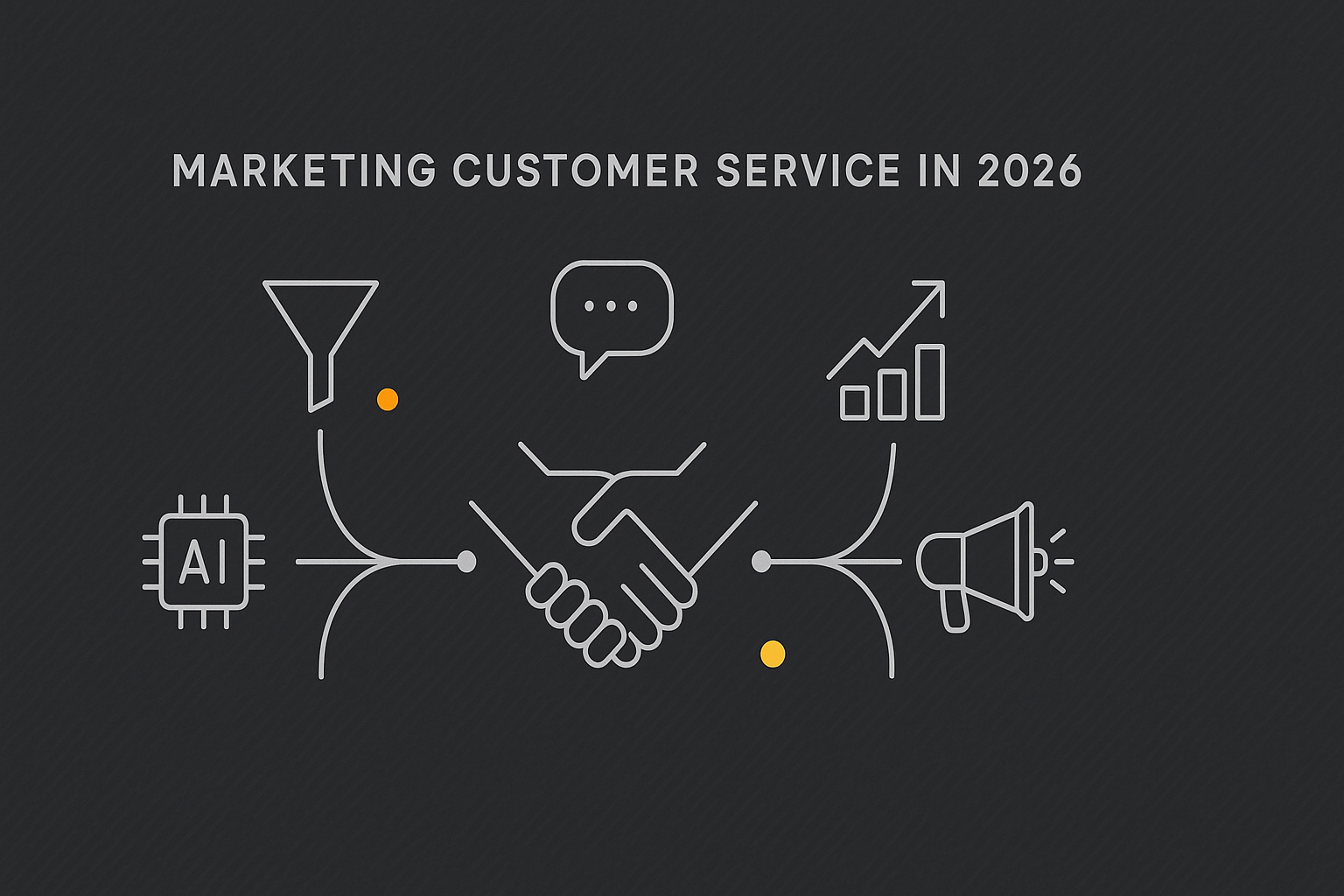
<p>In 2026, the line between marketing and customer service has all but disappeared. Businesses that thrive now transform every interaction into a chance to build loyalty and drive growth.</p> <p>This guide will show you how to integrate marketing customer service for maximum impact in today’s digital-first world. You’ll discover step-by-step frameworks, actionable strategies, and best practices that top brands use to stay ahead.</p> <p>Did you know increasing customer retention by just 5% can boost profits by up to 95%? As customer expectations rise, aligning your marketing customer service is no longer optional—it’s your path to sustainable success. Ready to future-proof your strategy? Let’s dive in.</p> <h2>The Evolution of Marketing Customer Service: From Support to Strategic Growth Engine</h2> <p>In 2026, marketing customer service is no longer just a support function—it is a strategic growth engine. As businesses adapt to digital-first expectations, the way customer service and marketing intersect has been fundamentally reshaped. Brands now recognize that every customer touchpoint is an opportunity to drive loyalty, advocacy, and long-term value.</p> <img src="https://xqvnmkjynbkcujcrtubi.supabase.co/storage/v1/object/public/article-images/5aac0c79-0fcc-4a33-b90c-d6dad169dc2f/article-5aac0c79-0fcc-4a33-b90-a-modern-infographic-diagram-on-a-f8f8f8-backgroun-0-8le5b5.jpg" alt="The Evolution of Marketing Customer Service: From Support to Strategic Growth Engine"><h3>The Shifting Role of Customer Service in Modern Marketing</h3> <p>Over the past decade, the role of customer service has shifted dramatically. No longer confined to handling complaints, customer service teams are now proactive brand ambassadors. They actively shape perceptions, build relationships, and contribute to the overall marketing customer service strategy.</p> <p>Customer feedback is gold. Modern brands weave real-time insights from support channels directly into their marketing campaigns. For instance, Signs.com stands out by making customer service a core differentiator. Their team’s responsiveness and care not only resolve issues but also inspire glowing reviews and repeat business.</p> <p>Omnichannel engagement is now the norm. With 74% of consumers expecting 24/7 support (Zendesk 2026 CX Trends), businesses must be available on live chat, social, email, and beyond. This new approach ensures that marketing customer service is always on, always listening, and always ready to deliver value.</p> <h3>Why Alignment Matters: The Business Case</h3> <p>The alignment between marketing and customer service is more than a nice-to-have. It is a proven driver of retention and profit. Just a 5% increase in customer retention can boost profits by up to 95%. This is because loyal customers buy more, stay longer, and refer others.</p> <p>Word-of-mouth and online reviews are directly influenced by marketing customer service excellence. In fact, 92% of consumers only trust businesses with 4+ star ratings. Every interaction shapes brand perception and trust. Reducing churn is also significantly more cost-effective than acquiring new customers.</p> <p>Reputation management happens at every touchpoint. When marketing and customer service teams share goals and data, they create a seamless experience that builds brand equity. For a deeper dive into the mechanics and benefits of integration, see this guide on <a href="https://www.catchdigital.io/blog/marketing-and-customer-service" target="_blank" rel="noopener noreferrer">Marketing and Customer Service Alignment</a>.</p> <h3>Key Challenges Businesses Face in 2026</h3> <p>Despite the promise, integrating marketing customer service in 2026 is not without hurdles. Fragmented data and siloed teams often stand in the way of delivering a unified brand experience. When teams work in isolation, valuable insights are lost.</p> <p>Customer expectations are rising. People want faster responses, more personalization, and consistent experiences across every channel. Meeting these demands is complex, especially as new platforms emerge.</p> <p>The balance between AI automation and the human touch is a constant challenge. Automation can handle routine queries, but human empathy is essential for building trust. Navigating these complexities requires a deliberate strategy that brings marketing customer service together to meet tomorrow’s challenges.</p> <h2>2026 Trends Shaping Marketing Customer Service</h2> <p>The future of marketing customer service is being rewritten in real time. As we move through 2026, five trends are transforming how brands connect, support, and grow their customer relationships. Let’s break down what’s driving change—and how you can stay ahead.</p> <img src="https://xqvnmkjynbkcujcrtubi.supabase.co/storage/v1/object/public/article-images/5aac0c79-0fcc-4a33-b90c-d6dad169dc2f/article-5aac0c79-0fcc-4a33-b90-a-clean-infographic-style-diagram-on-a-f8f8f8-back-1-c4ebrk.jpg" alt="2026 Trends Shaping Marketing Customer Service"><h3>Hyper-Personalization and AI-Powered Support</h3> <p>AI is now the backbone of marketing customer service in 2026. Brands use chatbots, predictive analytics, and machine learning to anticipate needs and instantly personalize every interaction. Imagine a customer reaching out with a question—the system already knows their purchase history, preferences, and even predicts what they might need next.</p> <p>According to Zendesk’s latest CX report, 88% of consumers expect faster responses than ever before. With AI handling routine queries and surfacing insights for human agents, businesses can deliver seamless support at scale. For a deep dive on this transformation, check out <a href="https://www.forbes.com/sites/forrester/2025/12/10/ai-gets-real-for-customer-service-in-2026/" target="_blank" rel="nofollow noopener noreferrer">AI's Impact on Customer Service in 2026</a>.</p> <h3>Omnichannel and Seamless Experience</h3> <p>Today’s customers are everywhere, and so is marketing customer service. Whether it’s social, email, live chat, or voice, the expectation is a unified, frictionless journey. Customers want to move from one channel to another without repeating themselves or losing context.</p> <p>Forward-thinking brands integrate social media for both instant support and marketing engagement. A customer might tweet about an issue and receive a helpful response within minutes, turning a potential complaint into a public win. This omnichannel approach strengthens loyalty and positions your brand as responsive and modern.</p> <h3>Proactive Engagement and Feedback Loops</h3> <p>Gone are the days when marketing customer service was just about putting out fires. In 2026, brands are using real-time data and feedback to proactively reach out—solving problems before they escalate and gathering insights that fuel smarter marketing.</p> <p>Closed-loop feedback systems help teams refine products, messaging, and service delivery. For example, if support identifies a recurring issue, marketing can address it in campaigns or FAQs, closing the gap between promise and experience.</p> <h3>Transparency, Trust, and Data Privacy</h3> <p>Trust is the currency of 2026. Customers expect brands to communicate openly and handle their data with care. In marketing customer service, this means being upfront about policy changes, sharing product updates, and ensuring privacy compliance at every step.</p> <p>Brands that prioritize transparency turn transparency into a competitive advantage. By proactively sharing service improvements and addressing concerns, companies build long-term loyalty and demonstrate that they value customer relationships as much as sales.</p> <h3>Employee Empowerment and Cross-Training</h3> <p>Behind every great marketing customer service experience is a well-trained, empowered team. In 2026, successful brands invest in cross-functional training, giving employees the tools to act as both support heroes and brand ambassadors.</p> <p>Collaboration between marketing and service teams fosters a culture of shared goals and open communication. This not only improves customer outcomes but also boosts morale and reduces turnover, proving that when your people thrive, your customers do too.</p> <h2>Step-by-Step Framework: Integrating Marketing and Customer Service for Maximum Impact</h2> <p>Blending marketing customer service into a seamless engine for growth is not just a trend—it is a necessity in 2026. The following step-by-step framework helps you break silos, build trust, and create unforgettable experiences that drive loyalty and revenue.</p> <img src="https://xqvnmkjynbkcujcrtubi.supabase.co/storage/v1/object/public/article-images/5aac0c79-0fcc-4a33-b90c-d6dad169dc2f/article-5aac0c79-0fcc-4a33-b90-a-clear-labeled-infographic-diagram-showing-a-seve-2-rbunut.jpg" alt="Step-by-Step Framework: Integrating Marketing and Customer Service for Maximum Impact"><h3>Step 1: Foster Organization and Open Communication</h3> <p>The first step in integrating marketing customer service is to unite your teams. Without strong communication, even the best strategies fall flat.</p> <p>Schedule regular cross-department meetings so marketers and support agents can share insights. Use shared KPIs to align everyone on the same goals.</p> <ul> <li>Hold weekly syncs to discuss customer trends.</li> <li>Leverage internal chat platforms for quick updates.</li> <li>Invite marketers to join support calls for real-time learning.</li> </ul> <p>When communication flows freely, marketing customer service becomes a shared mission, not a divided task.</p> <h3>Step 2: Align Customer Data and Insights</h3> <p>Unified data is the backbone of effective marketing customer service. Siloed information leads to missed opportunities and inconsistent experiences.</p> <p>Map the entire customer journey—from first click to latest support ticket. Use a robust CRM to centralize profiles, touchpoints, and feedback. This enables both teams to see the full picture and act faster.</p> <p>For a deeper dive on setting up a unified CRM, see <a href="https://www.catchdigital.io/service/crm-implementation" target="_blank" rel="noopener noreferrer">CRM Implementation for Unified Data</a>.</p> <p>With complete visibility, marketing customer service teams can personalize outreach and resolve issues before they escalate.</p> <h3>Step 3: Create Consistent Messaging and Experiences</h3> <p>Consistency is crucial for trust. Marketing customer service teams must speak with one voice across all channels.</p> <p>Keep product updates, promotions, and FAQs in one place. Standardize templates for emails, chats, and social responses. This ensures that regardless of who interacts with the customer, the messaging is clear and on-brand.</p> <ul> <li>Update support scripts in tandem with campaign launches.</li> <li>Cross-check marketing copy with support documentation.</li> <li>Monitor social replies for tone and accuracy.</li> </ul> <p>When messaging aligns, marketing customer service feels effortless for both staff and customers.</p> <h3>Step 4: Implement Proactive Service Strategies</h3> <p>Proactivity turns support into a marketing customer service powerhouse. Use analytics to anticipate common questions and launch resources before they are needed.</p> <p>Develop knowledge bases, how-to guides, and smart self-service tools. Inform marketing campaigns with real-time support data—spotting trends and adjusting offers on the fly.</p> <ul> <li>Publish top FAQs monthly.</li> <li>Alert customers to service changes before issues arise.</li> <li>Use chatbots for instant answers to routine queries.</li> </ul> <p>Proactive support lightens the load on agents and delights customers, making marketing customer service a true growth driver.</p> <h3>Step 5: Set Unified Goals and Track Performance</h3> <p>Shared goals keep marketing customer service teams focused and accountable. Establish clear, measurable metrics that reflect both retention and satisfaction.</p> <table> <thead> <tr> <th>Metric</th> <th>Why It Matters</th> </tr> </thead> <tbody><tr> <td>NPS</td> <td>Gauges loyalty and advocacy</td> </tr> <tr> <td>CSAT</td> <td>Measures satisfaction per touch</td> </tr> <tr> <td>LTV</td> <td>Values long-term relationships</td> </tr> <tr> <td>First Response</td> <td>Shows speed and responsiveness</td> </tr> </tbody></table> <p>Create dashboards for real-time tracking. For example:</p> <pre><code class="language-python">metrics = ['NPS', 'CSAT', 'LTV', 'First Response'] for metric in metrics: print(f"Tracking {metric} across all teams.") </code></pre> <p>When everyone tracks the same numbers, marketing customer service efforts are easier to improve and celebrate.</p> <h3>Step 6: Redistribute Budget for Customer-Centric Growth</h3> <p>Allocate resources where they create the most value. Shift some marketing spend to customer service technology, training, and retention programs.</p> <p>Invest in tools that streamline support and amplify positive reviews. Fund loyalty initiatives and referral programs, turning happy customers into advocates.</p> <ul> <li>Upgrade helpdesk software for faster responses.</li> <li>Sponsor customer webinars and education.</li> <li>Reward agents for service-driven upsells.</li> </ul> <p>A customer-focused budget transforms marketing customer service from a cost center into a profit engine.</p> <h3>Step 7: Maintain Transparency and Continuous Improvement</h3> <p>Lasting success in marketing customer service requires openness and a learning mindset. Share product updates, customer feedback, and performance results with all teams—often.</p> <p>Encourage honest conversations about what is working and what needs tweaking. Regularly review outcomes and adapt strategies to stay ahead of customer expectations.</p> <ul> <li>Host monthly feedback sessions.</li> <li>Publish internal reports on service wins and challenges.</li> <li>Celebrate improvements, big or small.</li> </ul> <p>Transparency keeps marketing customer service agile and accountable, building a culture of trust both inside and outside your organization.</p> <h2>Tools, Technology, and Metrics: Powering Marketing Customer Service in 2026</h2> <p>As marketing customer service continues to evolve, the right blend of tools, technology, and measurement is the fuel that powers high-performing teams. In 2026, success comes from seamlessly connecting platforms, tracking the right metrics, and building a culture that’s both data-driven and deeply human.</p> <img src="https://xqvnmkjynbkcujcrtubi.supabase.co/storage/v1/object/public/article-images/5aac0c79-0fcc-4a33-b90c-d6dad169dc2f/article-5aac0c79-0fcc-4a33-b90-a-clean-schematic-infographic-illustrating-the-int-3-ziydyt.jpg" alt="Tools, Technology, and Metrics: Powering Marketing Customer Service in 2026"><h3>Essential Tools for Integration</h3> <p>The foundation of marketing customer service is a unified tech stack. Centralized CRM platforms, like Salesforce, keep every customer interaction at your fingertips. AI-powered chatbots handle routine questions, freeing up human agents for complex needs. Internal communication tools ensure marketing and service teams stay aligned.</p> <p>Emerging technologies, such as predictive analytics and contextual AI, are game-changers. For a deeper look at how these innovations are transforming the space, check out the latest <a href="https://www.crescendo.ai/blog/emerging-trends-in-customer-service" target="_blank" rel="nofollow noopener noreferrer">AI Trends in Customer Service and CX</a>. Integrating these tools enables companies to anticipate customer needs and deliver hyper-personalized experiences.</p> <table> <thead> <tr> <th>Tool Type</th> <th>Example Platforms</th> <th>Primary Benefit</th> </tr> </thead> <tbody><tr> <td>CRM</td> <td>Salesforce, HubSpot</td> <td>Unified customer view</td> </tr> <tr> <td>AI Chatbots</td> <td>Zendesk, Intercom</td> <td>24/7 instant support</td> </tr> <tr> <td>Analytics Dashboards</td> <td>Tableau, Power BI</td> <td>Real-time insights</td> </tr> </tbody></table> <h3>Key Metrics to Monitor</h3> <p>Tracking the right metrics is critical for marketing customer service to drive growth. Focus on numbers that reflect both customer satisfaction and business health.</p> <p>Here are must-watch metrics:</p> <ul> <li><strong>Customer Satisfaction Score (CSAT)</strong></li> <li><strong>Net Promoter Score (NPS)</strong></li> <li><strong>Customer Lifetime Value (LTV)</strong></li> <li><strong>First Response & Resolution Time</strong></li> <li><strong>Online Review Ratings</strong></li> </ul> <p>These metrics reveal how well your teams are delivering on promises and where to invest for the biggest impact. By monitoring them consistently, companies ensure marketing customer service is always moving the needle on retention and loyalty.</p> <h3>Leveraging Data for Competitive Advantage</h3> <p>In 2026, data is your secret weapon. Real-time dashboards let marketing and customer service teams spot trends and opportunities instantly. By analyzing support interactions, you can personalize campaigns, predict churn, and pinpoint what keeps customers coming back.</p> <p>For example, tracking how a positive service experience leads to repeat sales helps teams fine-tune both outreach and support. When marketing customer service teams share insights, they create a feedback loop that outpaces the competition.</p> <p><strong>Pro Tip:</strong> Use analytics to test messaging across channels, then double down on what resonates.</p> <h3>Overcoming Technology Silos</h3> <p>Even with the best platforms, disconnected systems can block progress. Seamless integration between marketing automation and support tools is essential for marketing customer service to shine. Make sure data flows freely—no more copy-pasting between platforms.</p> <p>Prioritize platforms with open APIs and robust privacy controls. Compliance is non-negotiable, especially as customers become savvier about their data. By breaking down silos, you unlock a 360-degree view of every customer journey.</p> <ul> <li>Integrate CRM, marketing, and support tools</li> <li>Automate data syncs for accuracy</li> <li>Build in privacy and security from day one</li> </ul> <h3>Training and Change Management</h3> <p>The tech stack is only as strong as the people using it. Ongoing training ensures both marketing and customer service teams stay sharp as tools evolve. Invest in cross-training to nurture empathy and shared goals.</p> <p>Change management is about more than new software—it’s a mindset shift. Foster a culture that embraces digital adoption and celebrates customer-centric wins. When everyone is empowered, marketing customer service becomes a growth engine, not just a support function.</p> <p>Regular workshops, clear how-to guides, and recognition programs can keep your team engaged and ahead of the curve.</p> <h2>Real-World Examples and Case Studies: Success Stories in Marketing Customer Service</h2> <p>In 2026, the leaders in marketing customer service are not just responding to issues—they are building loyalty, trust, and growth with every interaction. Let’s break down how forward-thinking brands are turning support into a strategic advantage.</p> <div data-youtube-video> <iframe src="https://www.youtube.com/embed/7bnSDEWezn0" frameborder="0" allowfullscreen data-type="youtube" data-youtube-video-id="7bnSDEWezn0" ></iframe> </div> <h3>Turning Customer Service into a Marketing Asset</h3> <p>Signs.com has made marketing customer service its calling card. The company doesn’t just solve problems; it delivers experiences customers rave about. In fact, the majority of its five-star reviews cite standout support as a reason for repeat business. By embedding customer feedback into their marketing, Signs.com turns every positive interaction into a growth driver.</p> <table> <thead> <tr> <th>Metric</th> <th>Result</th> </tr> </thead> <tbody><tr> <td>% Reviews citing service</td> <td>70%+</td> </tr> <tr> <td>Repeat purchase rate</td> <td>38% increase</td> </tr> <tr> <td>NPS improvement</td> <td>+22 points</td> </tr> </tbody></table> <p>Want to learn how to transform your own support team into a marketing powerhouse? Dive into <a href="https://www.catchdigital.io/blog/marketing-support" target="_blank" rel="noopener noreferrer">Marketing Support Best Practices</a> for actionable tips.</p> <h3>Social Media as a Service-Marketing Bridge</h3> <p>Today’s brands use social channels as more than megaphones—they are real-time support desks and campaign research labs. Companies that excel at marketing customer service respond instantly to questions or complaints on platforms like X and Instagram, often turning public problems into public wins.</p> <p>By listening closely to customer conversations, marketing teams can spot emerging trends, adjust messaging, and even crowdsource ideas for new campaigns. This real-time feedback loop helps brands stay ahead of customer expectations.</p> <h3>Collaboration for Smoother Operations</h3> <p>When marketing, sales, and customer service teams work together, the impact is clear: higher loyalty, lower churn, and more consistent brand experiences. Breaking down internal silos allows customer insights to flow freely, so campaigns are informed by real-world service data.</p> <p>A unified approach to marketing customer service means everyone shares the same goals and KPIs. This alignment helps resolve issues faster, personalize outreach, and measure the true impact of every touchpoint.</p> <h3>Data-Driven Personalization in Action</h3> <p>Top brands are using marketing customer service data to tailor products, offers, and support. By analyzing the full customer journey, they can recommend the right solution at the perfect time. For example, a customer who frequently contacts support for a specific feature might receive personalized tips or targeted upgrades in their inbox.</p> <p>This approach not only boosts satisfaction but also increases lifetime value. Data-driven personalization ensures that every interaction feels relevant and valued.</p> <h3>Lessons Learned: What Top Brands Get Right</h3> <p>What do the best in marketing customer service have in common? It comes down to a few core principles:</p> <ul> <li>Invest in both cutting-edge technology and skilled people.</li> <li>Champion transparency and proactive communication.</li> <li>Maintain continuous feedback loops between marketing and service.</li> <li>Cross-train teams to foster empathy and shared vision.</li> </ul> <p>By following these lessons, brands turn every customer interaction into a growth opportunity—and set the stage for lasting loyalty.</p> <h2>The Future of Marketing Customer Service: Predictions and Actionable Next Steps</h2> <p>As we look ahead, the future of marketing customer service is defined by innovation, agility, and a relentless focus on customer needs. Businesses that thrive will be those that anticipate change and act quickly, making every interaction count.</p> <h3>The Rise of Proactive, Predictive Service</h3> <p>In 2026, marketing customer service is shifting from reactive problem-solving to proactive engagement. Predictive analytics allow brands to anticipate issues before customers even reach out. For example, common milestones like subscription renewals or usage spikes now trigger automated outreach.</p> <p>This proactive approach not only reduces frustration, it builds trust and loyalty. By using data to predict needs, companies can resolve concerns quickly and demonstrate that they value every customer. The result is a more seamless marketing customer service experience that drives retention and long-term growth.</p> <h3>Human + AI: Striking the Right Balance</h3> <p>While AI handles routine questions, complex issues still require a human touch. The most successful marketing customer service strategies blend automation with empathy. AI-powered chatbots streamline responses, but trained professionals step in for nuanced conversations.</p> <p>This balance ensures efficiency without sacrificing personalization. As <a href="https://www.zendesk.com/newsroom/articles/ai-ushers-in-era-of-contextual-intelligence-redefining-customer-experience-in-2026/" target="_blank" rel="nofollow noopener noreferrer">AI's role in redefining customer experience</a> expands, expect customer service professionals to become brand storytellers, not just problem solvers. Their ability to connect emotionally will set brands apart in a crowded digital landscape.</p> <h3>Customer Empowerment and Self-Service Evolution</h3> <p>Customers want control and quick solutions. In 2026, marketing customer service includes robust self-service options powered by AI. Interactive troubleshooting guides, dynamic FAQs, and personalized knowledge bases help customers find answers instantly.</p> <p>Empowering users to resolve issues independently not only improves satisfaction, it frees up teams to focus on higher-value interactions. As self-service tools evolve, they become a core pillar of marketing customer service, enabling businesses to scale support while maintaining quality.</p> <h3>Building Brand Loyalty in a Transparent World</h3> <p>Transparency is the new currency of trust. Modern consumers expect brands to communicate openly about updates, challenges, and wins. Marketing customer service teams who share service improvements and celebrate customer successes foster deeper loyalty.</p> <p>Honest, proactive communication reassures customers and turns them into advocates. By integrating transparency into every touchpoint, companies strengthen their reputation and ensure that marketing customer service becomes a driver of positive word-of-mouth.</p> <h3>Actionable Steps for Businesses in 2026</h3> <p>To prepare for the future of marketing customer service, businesses should:</p> <ul> <li>Audit current alignment between marketing and service teams</li> <li>Invest in technology and training for unified customer experiences</li> <li>Set up feedback loops to measure what matters most</li> <li>Prioritize agility and continuous adaptation</li> </ul> <p>These steps help companies turn marketing customer service into a strategic growth engine. For more on scaling retention and loyalty, explore <a href="https://www.catchdigital.io/blog/customer-growth" target="blank" rel="noopener noreferrer">Customer Growth Strategies</a> to complement your approach.<br><br>Ready to turn these strategies into real results for your business? If you’re as excited as I am about creating a seamless experience where marketing and customer service work hand-in-hand, let’s make it happen together. At Catch Digital, we specialize in building predictable, scalable growth systems that connect every customer touchpoint—combining smart technology, creative thinking, and radical transparency. Whether you’re looking to boost retention, unlock new revenue, or simply stay ahead of the curve in 2026, I’m here to help you take the next step. <a href="https://www.catchdigital.io/book-a-consultation" target="blank" rel="noopener noreferrer">Book a Strategy Call</a> and let’s chart your path to sustainable growth.</p>